A fleet can know exactly how much it spent on fuel last month and still not know whether that fuel was used efficiently.
The invoice shows the cost. The fuel transaction shows how much was purchased. But neither necessarily explains which vehicles are consuming more than expected, which trips are inefficient, how much fuel is being lost through idling, or whether driving behaviour is affecting consumption.
That is the gap fleet fuel analytics is designed to address.
Instead of treating fuel as one monthly expense, fuel analytics helps operators understand consumption at vehicle, trip, route, and fleet level. The objective is not simply to know how much fuel was used. It is to understand where it went, what influenced it, and where efficiency can improve.
What is Fleet Fuel Analytics?
Fleet fuel analytics is the process of collecting and analysing fuel-related data across vehicles and trips to understand consumption, efficiency, and cost patterns.
Rather than looking only at total litres or total fuel spend, operators can examine how consumption differs between vehicles, routes, trips, and time periods.
For example, two similar vehicles may complete comparable workloads but consistently report different fuel consumption.
That difference gives the fleet something useful to investigate.
Is one vehicle spending more time idling? Is driving behaviour different? Are the routes comparable? Has one vehicle’s fuel performance changed recently?
Fuel analytics helps move the conversation from “How much fuel did we use?” to “Why did we use that amount?”
What does Fuel Consumption Tracking Actually Show?
Fuel consumption tracking establishes the basic picture of how fuel is being used across fleet operations.
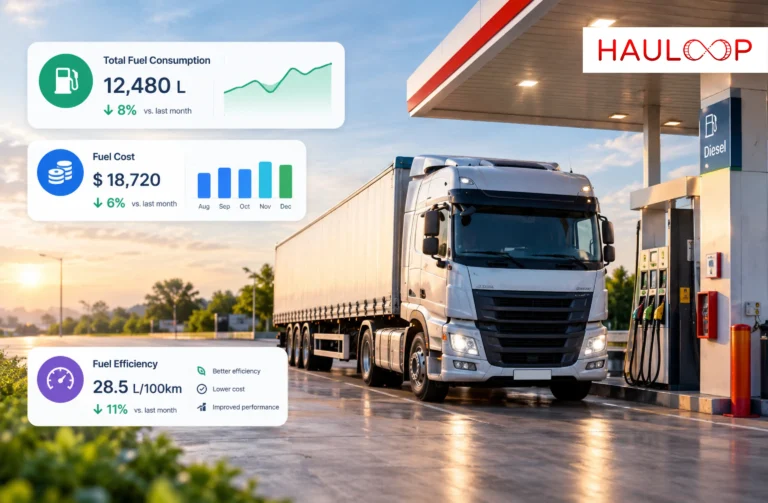
Hauloop’s Fuel Analytics approach brings fuel usage from vehicles, trips, and operations into one place. Operators can then monitor consumption patterns across different routes and driving conditions.
This matters because a fleet-wide fuel total can hide major differences.
Suppose fuel consumption increases by 6% this month.
The increase could be spread across the entire fleet. Or perhaps three vehicles are responsible for most of it.
Those are completely different operational problems.
Vehicle-level visibility allows the fleet to narrow the investigation instead of treating every vehicle the same way.
Why should Fuel Usage be Analysed by Vehicle?
Not every vehicle consumes fuel in the same way.
Vehicle type, load, route, operating conditions, driver behaviour, maintenance condition, and utilisation can all influence consumption.
This makes vehicle-level fuel insights particularly useful.
If one vehicle begins consuming more fuel than comparable vehicles performing similar work, the change deserves attention.
It does not automatically prove waste or a mechanical problem. But it gives the operator a starting point for investigation.
The fleet can compare current performance against previous periods or similar vehicles and determine whether the increase is temporary or part of a developing trend.
What does Idle Time Tell You About Fuel Efficiency?
A vehicle does not need to travel a mile to consume fuel.
When an engine remains running while the vehicle is stationary, fuel continues to be used without moving the trip forward.
Some idling is operationally necessary. A truck may be waiting in traffic, operating auxiliary equipment, or working under conditions where the engine must remain running.
The problem is unnecessary or excessive idling.
Idle time monitoring helps operators identify where this behaviour occurs repeatedly. Instead of simply knowing that fuel consumption increased, they can determine whether stationary engine time is contributing to the increase.
This turns idling from a hidden operating habit into something measurable.
How does Driver Behaviour Affect Fuel Consumption?
Fuel efficiency is not determined entirely by the vehicle.
How the vehicle is driven matters too.
Repeated aggressive acceleration, harsh driving, unnecessary idling, and inefficient speed patterns can increase fuel usage.
This is why Hauloop’s fuel analytics approach includes driver behaviour impact as part of fuel analysis.
The purpose is not to assume that every increase in consumption is the driver’s fault.
Instead, operators can compare driving patterns with fuel performance and determine whether there is a consistent relationship.
If the same vehicle consumes noticeably more fuel with certain driving patterns, the fleet has more useful information for coaching and efficiency improvement.
Why Analyse Fuel at Trip and Route Level?
Monthly fuel totals can tell you whether spending increased.
Trip-level information can help explain where.
Imagine two routes covering approximately the same distance. One consistently requires more fuel.
The reason could be congestion, excessive stopping, idling, terrain, inefficient routing, or differences in operating conditions.
Trip-based fuel analysis allows operators to examine fuel consumption around the work the vehicle actually performed.
Over time, repeated differences can reveal which routes or operating patterns are less fuel-efficient.
That information can support better planning instead of simply accepting higher consumption as part of the job.
Why are Fuel Trends More Useful than One High Reading?
One unusual fuel reading does not necessarily indicate a problem.
Patterns are more useful.
If a vehicle’s fuel consumption rises once and returns to normal, there may be a reasonable operational explanation.
If consumption continues increasing across several weeks, the situation deserves closer investigation.
Fuel trends help operators see whether efficiency is improving, remaining stable, or deteriorating.
The same approach can be applied across vehicles and routes.
Rather than reacting to every isolated change, operators can focus on persistent patterns that have a greater impact on fleet costs.
How does Fuel Analytics Help Control Costs?
Fuel cost control starts with understanding what is driving the expense.
If excessive idling is responsible for unnecessary consumption, the response is different from a situation where inefficient routes are increasing mileage.
If one vehicle consistently performs below comparable vehicles, the fleet may need to investigate its operation or condition.
Fuel analytics helps separate these causes.
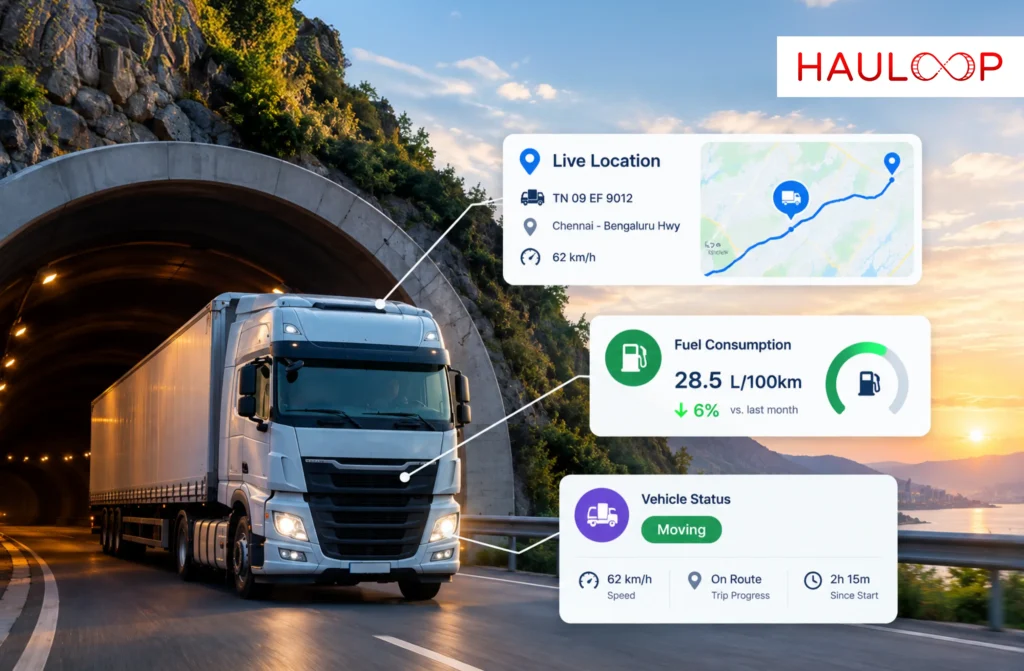
Hauloop brings fuel consumption, idle time, driver behaviour, trip analysis, cost information, and performance comparison into a unified view. This allows operators to move from identifying higher fuel spend to understanding where the increase is occurring and what may be causing it.
That is what turns fuel data into an operational decision.
Conclusion
Knowing total fuel spend is important, but it only tells the fleet what it paid.
Fleet fuel analytics goes further by showing how fuel is being consumed across vehicles, trips, routes, and operating conditions.
Vehicle-level consumption, idle time, driver behaviour, trip performance, and long-term trends can help operators distinguish necessary fuel usage from inefficiencies that deserve attention.
The objective is not simply to collect more fuel data. It is to make fuel consumption understandable enough to act on.
If your primary challenge is understanding where fuel is going and what is driving unnecessary consumption, an AI Fleet Management Platform can bring fuel usage and operational context into one view. Book a demo with Hauloop to see how fleet fuel analytics works in practice.
Frequently Asked Questions
What is fleet fuel analytics?
Fleet fuel analytics examines fuel consumption across vehicles, trips, routes, and operating periods to help fleets understand usage patterns, inefficiencies, and cost drivers.
Can fuel analytics show consumption for individual vehicles?
Yes. Vehicle-level fuel insights allow operators to review and compare how individual vehicles perform in terms of fuel consumption and efficiency.
Can fuel analytics identify excessive idling?
Yes. Idle time monitoring can help identify vehicles spending excessive time running while stationary, making potential fuel waste easier to investigate.
How does driver behaviour affect fleet fuel usage?
Driving patterns such as aggressive acceleration, harsh driving, and unnecessary idling can influence fuel consumption and can be reviewed alongside fuel-performance data.
Why is trip-level fuel analysis useful?
It helps operators understand how fuel consumption changes between trips and routes rather than relying only on fleet-wide totals.
Can fuel analytics help reduce fleet costs?
Fuel analytics can identify where inefficiencies and higher consumption are occurring, giving fleet operators better information for making fuel-saving decisions.