Every Stop Has a Place in the Day
Stops are organised into a clear serving sequence before vehicles leave, giving dispatch and drivers a defined plan for how the work should progress.
Build the day’s stops into an organised route before vehicles leave. Hauloop helps dispatch teams determine the most practical stop sequence and reduce unnecessary distance across each planned journey.
Start Your 3-Month Trial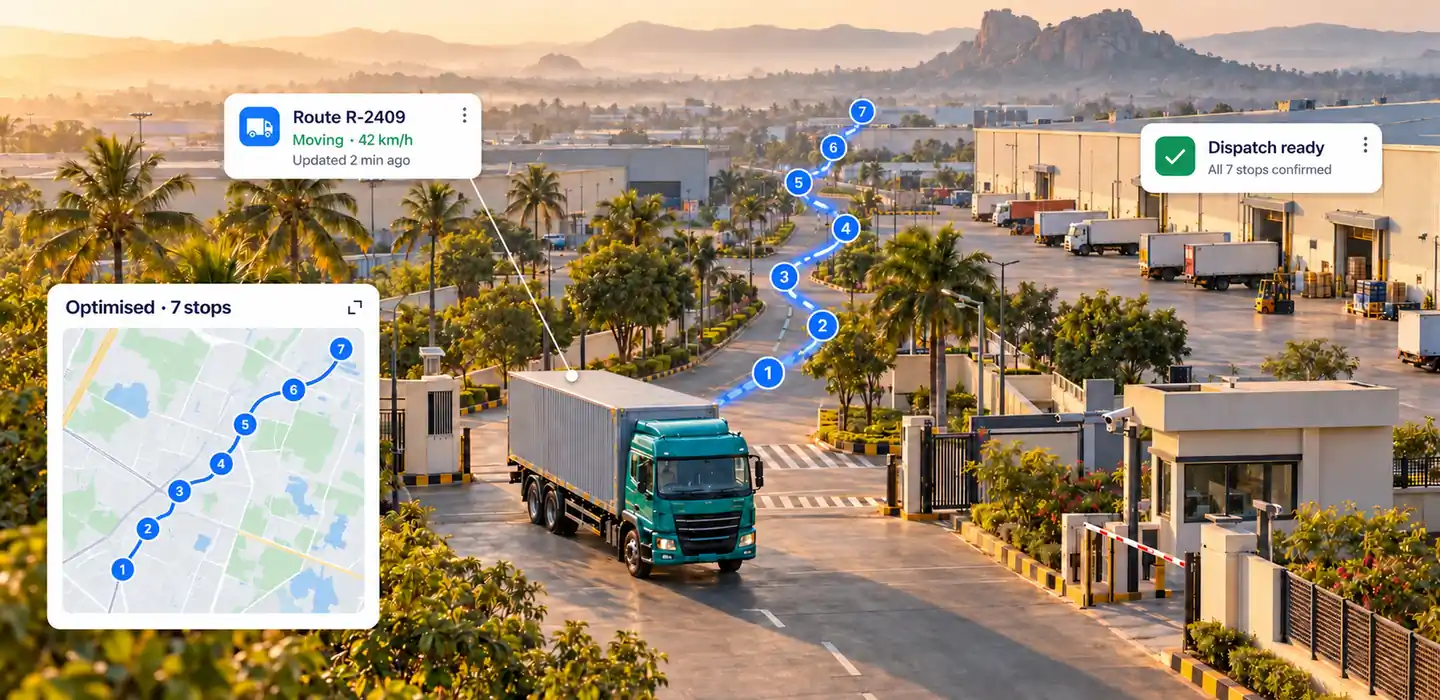
Stops are organised into a clear serving sequence before vehicles leave, giving dispatch and drivers a defined plan for how the work should progress.
A better stop sequence helps prevent avoidable backtracking and unnecessary kilometres that can appear when destinations are handled in an inefficient order.
When vehicles spend less time covering avoidable distance, more of the working day can be used completing the stops already assigned to the route.
Instead of handing drivers disconnected destinations to work through themselves, dispatch can begin the journey with those stops already structured into a planned route.
Seeing how stops come together before dispatch helps operations recognise when a planned route is becoming too demanding for the available journey.
With the stop sequence established before departure, drivers can follow the planned journey instead of repeatedly deciding which destination should come next.
Bring multiple destinations into one route plan so dispatch can structure the complete journey before assigning it for execution.

Arrange destinations in the order they should be served, turning a collection of stops into a clear sequence for the planned journey.

See the distance associated with the planned route, giving dispatch a practical measure to consider before committing a vehicle to the journey.

Review the expected duration of the planned journey so teams can understand how much operating time the route is likely to require.

Evaluate the stops together to create a more efficient route and reduce avoidable backtracking or unnecessary travel between destinations.

Review the planned journey before dispatch to confirm how the stops connect and how the vehicle is expected to move through them.

Connect the completed route plan to the vehicle that will carry out the journey, moving the work from planning into dispatch.

Change the planned stops or their sequence when operational requirements shift before the vehicle is dispatched.

Keep planned routes available for future operational reference instead of rebuilding the same journey information from the beginning.

From the destinations that need to be covered to the route drivers receive, Hauloop structures the planning process before vehicles begin their journeys.
Enter the locations that need to be served so dispatch starts with the complete set of destinations that must be covered.
Structure the destinations into a logical serving order, reducing inefficient movement between one stop and the next.
Turn the ordered stops into a complete route that shows how the vehicle should progress through the assigned journey.
Examine how the planned journey comes together and make necessary changes before the route becomes part of the driver’s working day.
Move from planning to execution with the route and stop order already established, so the driver knows how the assigned journey should progress.
See how dispatch changes when the day is organised into planned routes before vehicles leave, instead of route decisions being made as the work unfolds.
Dispatch begins with addresses or jobs that still need to be worked into a sensible journey for the vehicle.
The destinations are brought together before departure, giving dispatch a structured route to work from.
The next destination may depend on driver judgement or instructions sent during the journey.
The serving sequence is established during planning, so the journey starts with a defined order for completing the stops.
An inefficient sequence can send a vehicle back across roads or areas it has already covered.
The route can be structured before dispatch to reduce unnecessary movement between destinations.
A poorly arranged journey may only become obvious once the driver is already working through the stops.
Dispatch can review how the route comes together and make changes before the vehicle leaves.
When the journey is not fully structured, drivers may spend part of the working day deciding how to approach the remaining stops.
The route and stop sequence are already established, reducing the routing decisions that need to be made during the trip.
A new stop or changed requirement can mean reorganising the journey and communicating the revised order separately.
Changes can be incorporated into the planned journey before departure, keeping the updated stop order together as one route.
Multi-Stop
Route Planning
Planned
Stop Sequence
Before Dispatch
Route Review
One Route
Connected Stops
Adjustable
Journey Plan