The monthly fuel report shows that your fleet used fewer litres than it did last month. That sounds like progress.
But the same report also shows that the cost of completing each delivery has increased.
So, what changed?
Perhaps vehicles travelled more empty kilometres. Maybe drivers spent longer idling at customer sites. A vehicle could be consuming more fuel than others completing similar work. Fuel might also have been purchased away from an assigned route or without a matching vehicle journey.
The total number of litres cannot answer these questions.
Modern fuel management software looks beyond how much fuel entered or left a tank. It connects fuel activity with vehicles, drivers, routes, trips, operating conditions, and costs, helping fleet managers understand where fuel is being used and whether that use is justified.
What is Fuel Management Software?
Fuel management software is a system used to record, monitor, and analyse how fuel is purchased and consumed across a fleet.
Basic fuel records normally show the quantity purchased and the amount paid. That information is useful for accounting, but it does not explain how efficiently the fuel supported fleet work.
Fuel management software adds operational context.
It can connect fuel transactions with the vehicle involved, the assigned driver, the location of the purchase, the journey being completed, the distance travelled, and the activity recorded before and after refuelling.
This gives fleet managers a clearer picture of fuel performance.
Instead of asking only, “How many litres did we consume?” they can ask:
- Which vehicles consumed the most fuel?
- Was the consumption reasonable for the work completed?
- Where did unnecessary fuel use occur?
- Did a purchase match the vehicle’s actual location?
- Which routes or driving habits increased fuel costs?
- Does a vehicle need inspection or maintenance?
The purpose is not simply to collect more fuel data. It is to help the business understand why fuel costs change and what it can do about them.
What does Fleet Fuel Management Record During Refuelling?
The first layer of fuel management begins with the transaction.
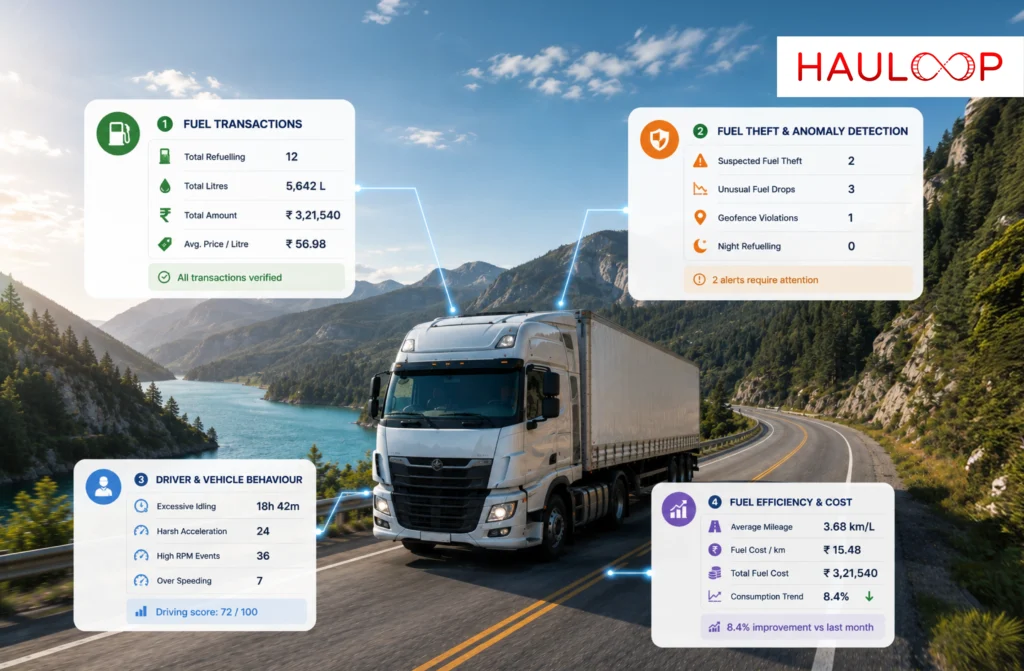
When fuel is refilled, the software may record details such as the date, time, station, vehicle, driver, fuel type, quantity, price per litre, total cost, odometer reading, and payment method.
These details establish who purchased the fuel, where it was purchased, and which vehicle should have received it.
This becomes especially useful when a business uses fuel cards. Fuel card integration can bring purchase records into the fleet system automatically, reducing the need to enter information manually from receipts and monthly statements.
However, recording a transaction does not confirm that it was valid.
The software must compare the purchase with other operational information. Was the assigned vehicle near the station at the time? Was the card used during an active shift? Does the quantity fit within the tank’s available capacity? Was the correct fuel type purchased? Does the odometer reading align with the vehicle’s journey history?
A transaction that does not match the surrounding activity may require investigation.
This comparison turns a simple fuel receipt into an accountable operational record.
How does it Measure Actual Fuel Efficiency for Your Fleet?
Knowing how many litres a vehicle consumed is only useful when that number is compared with the work it completed.
Fuel management software can relate consumption to distance, engine hours, routes, trips, deliveries, and other operating activity. This allows managers to calculate measures such as fuel used per kilometre, fuel cost per trip, or fuel cost per operating hour.
Even then, the number needs context.
Two vehicles of the same type may produce different results because they are not working under identical conditions. One may carry heavier loads, travel through urban traffic, climb steep routes, or spend longer waiting with the engine running. The other may travel mostly on open roads.
A fair comparison considers these differences before deciding that one vehicle or driver is inefficient.
The software can also show how performance changes over time. If a vehicle normally maintains a consistent consumption level and then begins using more fuel on similar work, the change deserves attention.
The cause may be operational, mechanical, or behavioural. The important point is that the team can see the pattern instead of discovering it only through a higher monthly bill.
Where does Fuel Waste Occur?
Not every litre consumed helps the fleet complete productive work.
Fuel can be used while a vehicle is idling, travelling empty, taking an inefficient route, making an unauthorised journey, or waiting unnecessarily between assignments.
These losses are difficult to identify from transaction data alone because the fuel purchase itself may be legitimate. The waste happens afterwards, during the vehicle’s activity.
Idle time is one example.
Some idling may be necessary for traffic, loading, climate control, or equipment operation. But repeated or extended idling can indicate poor scheduling, unnecessary engine use, or long waiting times at particular locations.
Route information provides another layer of context. A vehicle may consume more fuel because it travelled farther than planned, missed a turn, made an unapproved stop, or was assigned inefficiently.
Empty kilometres matter too. A delivery can be completed successfully while the return journey creates avoidable fuel expense because no follow-up work was planned.
Fuel management software helps separate fuel used for productive work from fuel lost through preventable operating conditions. This allows managers to address the cause rather than simply asking drivers to “use less fuel.”
Can it Detect Fuel Theft or Misuse?
Fuel loss does not always appear as an obvious missing transaction.
It may appear as a sudden drop in tank level, repeated small differences between purchased and recorded fuel, a card used when the assigned vehicle is elsewhere, or a refuelling quantity that does not fit the vehicle’s tank capacity.
Fuel management software can identify these inconsistencies by comparing fuel records with GPS location, vehicle movement, tank-level changes, routes, driver assignments, and expected consumption.
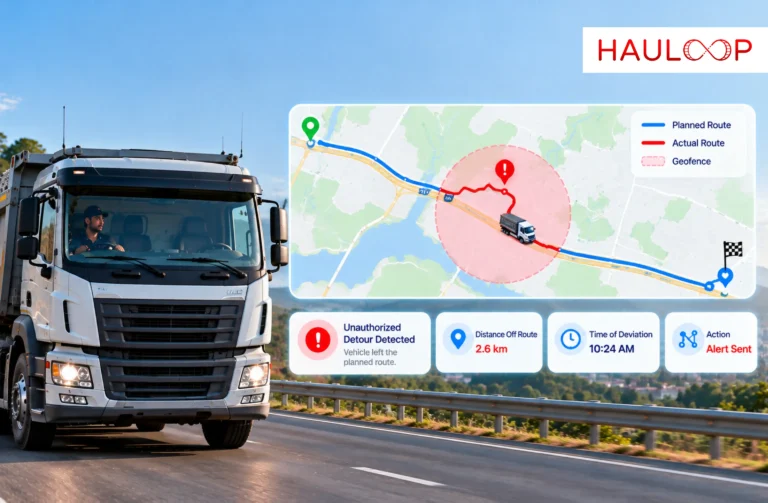
For example, a fuel-card transaction may be recorded at a station while the assigned vehicle is parked several kilometres away. A large tank-level drop may occur while a vehicle is stationary outside an approved location. A driver may purchase more fuel than the vehicle could reasonably accept.
These events should be treated as exceptions requiring investigation. A single unusual reading does not automatically prove theft. Sensor movement, steep ground, refuelling activity, data delays, and vehicle operating conditions can also affect tank-level readings.
This is why context matters. Hauloop’s guide to fuel theft detection explains how vehicle conditions and surrounding activity help distinguish genuine risk from misleading alerts.
The objective is to surface credible concerns early without overwhelming managers with warnings that have no operational meaning.
What can Fuel Data Reveal About Drivers and Vehicles?
A change in fuel consumption is often a symptom of something happening elsewhere in the fleet.
Driving behaviour can influence fuel use. Frequent harsh acceleration, speeding, unnecessary idling, poor route adherence, and inconsistent gear use may cause one driver to consume more fuel than another completing comparable work.
The data should be used carefully. Driver performance must be assessed alongside traffic, load, terrain, route type, and vehicle condition. Comparing drivers without these factors can produce an unfair conclusion.
When the context is clear, the information can support practical coaching. A manager can discuss a repeated pattern, explain its effect on fuel costs, and monitor whether performance improves.
Vehicle condition can also affect consumption.
Tyre pressure, wheel alignment, engine performance, filters, fuel systems, and delayed servicing may cause a vehicle to work harder than expected. A gradual rise in fuel use across similar routes can therefore become an early reason to inspect the asset.
Connecting fuel trends with vehicle maintenance records helps teams determine whether a change relates to the driver, the vehicle, the work, or a combination of factors.
This is more useful than blaming the person driving or replacing a vehicle based on one isolated result.
How does Fuel Data Improve Cost Control?
Fuel management becomes valuable when the information leads to a better decision.
A fleet manager may use the data to reduce unnecessary idling, change a route, reassign a vehicle, schedule maintenance, investigate a transaction, coach a driver, or review where vehicles refuel.
The same data can support budgeting.
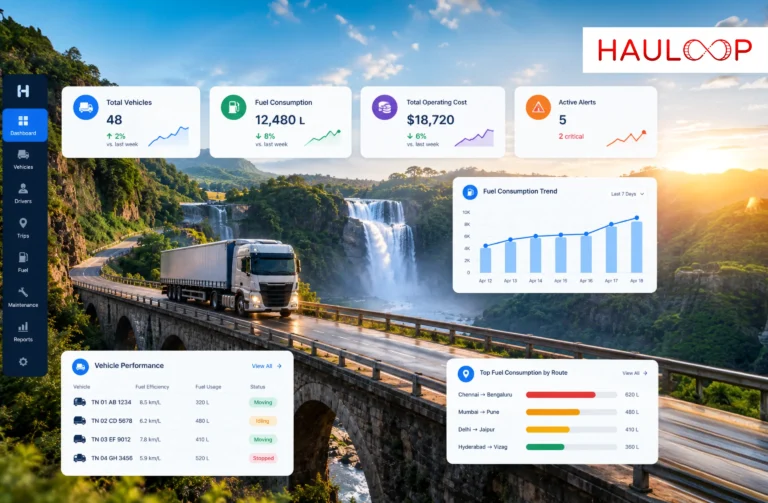
Instead of using a single fleet-wide fuel total, the business can examine cost by vehicle, driver, route, trip, customer, delivery, or period. This shows which parts of the operation create value and which ones quietly increase cost.
A route with fewer kilometres may not be the cheapest if congestion causes long idle periods. An older vehicle may appear affordable until its fuel use and maintenance costs are reviewed together. A customer delivery may generate revenue while repeated waiting time reduces its actual margin.
Fuel data therefore supports decisions beyond fuel purchasing. It can influence scheduling, vehicle selection, route planning, driver development, maintenance priorities, and replacement planning.
The goal is not to reduce fuel consumption at any cost. Vehicles need fuel to complete work. The goal is to ensure that the fuel being purchased is used for productive, authorised, and efficiently planned activity.
Conclusion
Litres consumed tell fleet managers how much fuel was used. They do not explain whether that fuel supported the right vehicle, driver, route, trip, or business outcome.
Fuel management software fills that gap by connecting purchases and tank activity with real fleet operations. It records where fuel was purchased, measures efficiency, identifies waste, surfaces suspicious activity, reveals driver and vehicle patterns, and links fuel spending with completed work.
That context changes fuel management from monthly expense reporting into daily operational control.
Explore Hauloop’s AI Fleet Management System Platform and Book a Demo to see how connected fuel data can give your team a clearer understanding of where costs begin and where action is needed.
Frequently Asked Questions
What information does fuel management software track?
Fuel management software may track fuel quantity, price, purchase time, station, vehicle, driver, odometer reading, tank level, distance, idling, routes, trips, and operating costs. The exact information available depends on the connected sensors, telematics devices, and fuel-card providers.
Is fuel management software the same as a fuel card?
No. A fuel card is a payment and purchasing tool, while fuel management software analyses fuel activity across the fleet. Connecting the two allows transaction records to be compared with vehicle location, mileage, driver assignment, and tank activity.
Can fuel management software identify excessive idling?
Yes. When the system receives vehicle or engine data, it can show when and where a vehicle remained running without productive movement. Managers can then determine whether the idling was operationally necessary or represents avoidable fuel waste.
How does the software calculate fuel efficiency?
It compares fuel consumed with an operating measure such as distance travelled, engine hours, trips, or deliveries. Accurate comparisons should also consider vehicle type, load, road conditions, traffic, terrain, idling, and the work completed.
Can fuel software prove that theft has occurred?
Not by itself. It can identify suspicious activity such as unexpected tank-level drops, mismatched locations, or purchases exceeding tank capacity. These exceptions provide evidence for investigation, but the surrounding vehicle, sensor, transaction, and driver data must also be reviewed.
Is fuel management software useful for a small fleet?
Yes. A small fleet can also lose money through idling, inefficient routes, poor refuelling records, vehicle problems, or unauthorised purchases. The value depends less on fleet size and more on whether the software helps managers find and correct avoidable fuel costs.