Fuel is one of those costs that doesn’t stay still. One month looks manageable. The next month, it spikes, and no one can clearly explain why. A few extra trips, slight route changes, a bit of idling here and there, and suddenly your fuel expenses are higher than expected.
The challenge isn’t just the cost itself. It’s the lack of visibility behind it.
Most fleet operations don’t have a clear, real-time understanding of how fuel is being used across vehicles, routes, and drivers. And when you can’t see what’s happening, controlling it becomes difficult.
That’s exactly where a fleet fuel management system comes in. It gives you the visibility, control, and insight needed to manage fuel as a measurable, controllable part of your operations, not just an expense you review at the end of the month.
What is a Fleet Fuel Management System?
A fleet fuel management system is a technology-driven solution that helps businesses monitor, track, and optimize fuel usage across their entire fleet.
Instead of relying on fuel receipts, manual logs, or delayed reports, the system collects real-time data from vehicles, fuel cards, and telematics systems. This data is then processed and presented in a way that helps you understand exactly how fuel is being consumed.
In simple terms, it answers critical questions like:
• How much fuel is each vehicle using?
• Where is fuel being consumed inefficiently?
• Are there unusual patterns or potential misuse?
• How does fuel usage vary across routes, drivers, or conditions?
When integrated into a real-time AI fleet management platform, fuel data becomes part of a larger operational picture, connecting trips, vehicle performance, and driver behavior.
Why is Fuel Management a Major Challenge for Fleet Operations?
Fuel costs are not just high, they’re unpredictable.
Without proper tracking, small inefficiencies go unnoticed. A few minutes of extra idling, inefficient routes, aggressive driving, or even minor fuel pilferage can quietly increase overall expenses.
The problem is that these issues don’t show up immediately. They only become visible when you review monthly costs, and by then, it’s too late to fix what has already happened.
This leads to:
• Rising and unexplained fuel expenses
• Difficulty identifying the root cause of inefficiencies
• Limited control over driver and vehicle behavior
• Missed opportunities to optimize routes and operations
Without a structured system, fuel becomes a reactive cost instead of something you can actively manage.
How does a Fleet Fuel Management System Work?
A modern fleet fuel management system works by continuously collecting and analyzing fuel-related data from multiple sources.
This typically includes vehicle telematics, fuel sensors, GPS data, and fuel card transactions. The system combines this information to create a detailed, real-time view of fuel usage across your fleet.
As vehicles operate, the system tracks fuel consumption in relation to distance, routes, speed, and driving patterns. It can detect inconsistencies, such as sudden drops in fuel levels or usage patterns that don’t align with trip data.
More importantly, it doesn’t just display this data, it translates it into actionable insights. It highlights inefficiencies, flags unusual activity, and helps you understand where fuel is being wasted.
This allows fleet managers to take corrective action immediately, rather than waiting for end-of-month reports.
What can You Manage With it?
A fleet fuel management system gives you control across every dimension of fuel usage:
Real-Time Fuel Visibility
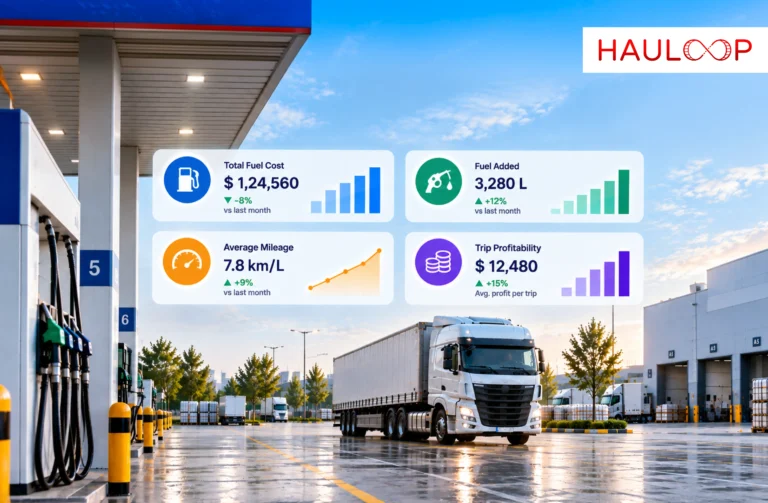
Monitor consumption across all vehicles and trips as they happen, eliminating guesswork and delayed reporting.
Anomaly Detection
If a vehicle consumes more fuel than expected for a specific route, the system flags it immediately, making it easier to catch inefficiencies or pilferage early.
Driver Behaviour Tracking
Aggressive driving, harsh acceleration, and excessive idling all increase fuel consumption. Linking fuel data to driver behaviour helps improve practices and accountability.
Route Optimization
When fuel data is combined with route and traffic insights, it becomes easier to identify more efficient paths and reduce unnecessary consumption.
Fuel Card Reconciliation
Cross-reference fuel card transactions with GPS and sensor data to detect discrepancies and prevent misuse.
Together, these capabilities turn fuel management from a passive process into an active, controlled part of daily operations.
What Problems does it Solve?
Fuel management systems address several common challenges that fleet operators face every day.
One of the biggest problems is the lack of transparency. Without clear visibility, it’s difficult to understand where fuel is being used or wasted. A structured system provides that clarity.
Another issue is delayed insights. Traditional methods rely on historical data, meaning decisions are always made after the fact. Real-time systems allow immediate action.
Fuel misuse and pilferage are serious concerns, especially across large fleets. Without monitoring, irregularities go undetected. A fuel management system flags suspicious patterns and prevents losses before they accumulate.
Inefficient driving habits also contribute significantly to fuel costs. By analyzing driver behavior, the system helps improve efficiency and reduce unnecessary consumption.
Conclusion
Fuel costs don’t increase overnight. They rise gradually through small inefficiencies that go unnoticed, extra idling, inefficient routes, undetected pilferage, and driving habits that no one is measuring.
A fleet fuel management system brings those inefficiencies into view. It provides the data, insights, and control needed to manage fuel effectively and reduce unnecessary costs.
When combined with a real-time fleet management system and AI-driven insights, it becomes a powerful tool for improving overall operational efficiency, turning fuel from a reactive expense into something you can actively control and optimize.Hauloop combines fuel intelligence with real-time tracking and AI-driven insights, giving you complete visibility and control over your fleet’s fuel consumption. Book a demo today to explore more!
Frequently Asked Questions
How much can a fleet fuel management system actually reduce fuel costs?
Fleet operations typically see a 10–20% reduction in fuel costs after implementing a structured fuel management system. The actual savings depend on fleet size, current inefficiencies, and how actively the data is used. Idling reduction and route optimization alone can account for a significant portion of those savings.
How does a fuel management system detect fuel pilferage?
The system cross-references fuel card transactions, fuel sensor readings, and GPS trip data. If a fuel fill-up is logged but doesn’t align with the vehicle’s location or trip distance, it gets flagged as a discrepancy, making irregularities visible in real time.
What is the impact of idling on fuel costs?
Excessive idling is one of the most common and overlooked sources of fuel waste. A vehicle idling for one hour can consume 1–2 litres of fuel depending on engine size. Across a 20-vehicle fleet, unmonitored idling can add up to significant monthly losses.
Does a fuel management system work without telematics hardware?
Most systems require some form of telematics or fuel sensor integration to provide real-time data. However, even fuel card transaction data alone can provide useful insights into consumption patterns, though with less granularity than a fully integrated system.
How is fuel management different from basic GPS tracking?
GPS tracking tells you where a vehicle is. A fuel management system tells you how much fuel was used, on which route, by which driver, and whether that consumption was normal or not.
How long does it take to see results?
Most fleet operators begin seeing measurable improvements within the first 4–6 weeks, primarily through reduced idling, improved driver behaviour, and early detection of inefficiencies. Deeper cost reductions typically show up within 2–3 months.