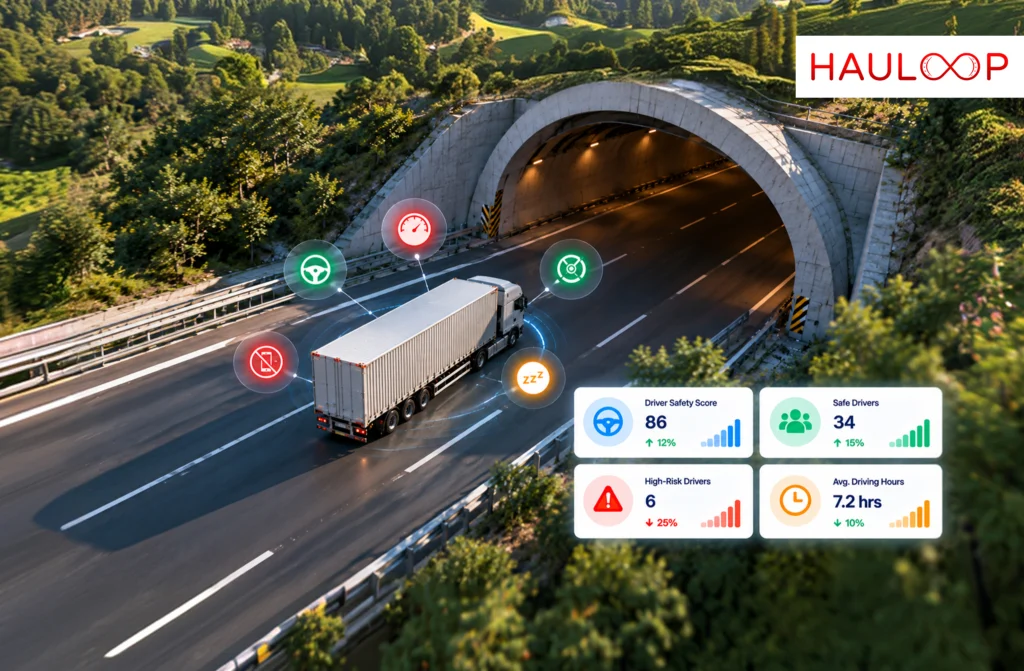
A fleet manager opens the safety dashboard after a busy week. It shows 26 speeding events, 14 harsh-braking events, nine rapid accelerations and five sharp turns.
There is plenty of data. The difficult part is deciding what deserves attention first.
Should the manager speak to the driver with the most speeding events, the driver with the sharpest decline or the driver whose different behaviours create the highest combined risk? Reviewing every metric separately makes that decision slower and can cause an important pattern to disappear between several reports.
The underlying behaviours matter. The National Highway Traffic Safety Administration reports that speeding contributed to 29% of all US traffic fatalities in 2024. However, a fleet still needs a practical way to combine speeding with braking, acceleration, cornering and other available signals.
A fleet driver safety score gives managers one place to begin. It summarises selected driving behaviours into a consistent result while retaining the evidence behind that result.
Let’s examine why one score can make safety data easier to prioritise and why the number should guide an investigation rather than become the final judgement on a driver.
Separate Metrics Make it Hard to See Who Needs Attention First
Each safety metric answers a different question.
Speeding data shows whether a driver exceeded a configured threshold. Harsh-braking records show sudden deceleration. Acceleration and cornering events reveal other changes in vehicle movement. Supported camera systems may add distraction, following-distance or seat-belt information.
When these measurements remain separate, managers must compare different screens, time periods and event totals before deciding whether a pattern exists.
One driver may have several moderate behaviours rather than leading any single category. For example, the driver may record some speeding, some harsh braking and repeated rapid acceleration. None of the individual totals appears highest, but together they may show a broader consistency problem.
A combined score makes that pattern easier to notice. It gives the manager a common starting point across the drivers being reviewed.
One Score Gives Your Team a Starting Point, Not a Verdict
A driver safety score converts selected behavioural data into a common scale. The precise inputs, thresholds and weightings depend on the scoring system and the data available from the fleet’s devices.
Hauloop’s driver safety overview brings safety scores, harsh-event information, supported dashcam evidence and coaching workflows into the wider fleet operation.
The score helps answer an immediate management question: where should we look first?
It should not be treated as automatic proof that the lowest-scoring driver is unsafe. A driver can brake sharply to avoid a pedestrian, exceed a threshold during an approved emergency response or accumulate more events simply because they spend more time behind the wheel.
The score identifies a priority for review. The manager still needs to understand the events that produced it.
Keep Every Score Connected to the Events Behind it
A useful score must be explainable.
When a driver’s result changes, the manager should be able to open it and see which behaviours contributed, when they occurred and whether the change came from one serious event or a repeated pattern.
Our guide to score inputs explains the behaviours that can sit behind the final number. That detail is essential because two drivers can receive similar scores for entirely different reasons.
One may have repeated low-level speeding. Another may have fewer but more severe braking and cornering events. Giving both drivers the same generic instruction would miss the actual issue.
Hauloop’s harsh-event detection allows the team to review recorded braking, acceleration, cornering and speeding events. Connecting the summary score to these records makes the result easier to explain and act upon.
Use Score Changes to Prioritise the Right Driver Conversation
The ranking alone is less valuable than the direction of travel.
A driver who has remained within a stable range for several months may not need the same response as someone whose score has fallen across four consecutive weeks. The second pattern suggests that something has changed.
The manager can then check whether the decline is connected to a new route, increased workload, unfamiliar vehicle, difficult schedule or a specific behaviour becoming more frequent.
This is where the score becomes an early-warning tool. Hauloop’s article on developing safety patterns explains why a repeated change is often more useful than one isolated alert.
The practical priority should be:
- Review a significant score decline
- Identify the behaviours behind it
- Confirm whether the pattern is repeated
- Check the relevant trip and operating context
- Decide whether coaching, monitoring or another response is appropriate
The score reduces the time spent deciding where to start. It does not remove the need for a fair review.
Turn the Number Into Coaching Your Driver Can Use
“Your score is 72” does not tell a driver what to change.
Useful coaching translates the result into specific behaviour. If speeding is concentrated on one road section, the discussion can focus on that location and the conditions surrounding those events. If rapid acceleration appears after every customer stop, the driver can be shown the repeated pattern rather than receiving a general warning.
Hauloop’s driver coaching connects safety information with structured feedback. The score identifies who may need attention, while the contributing events help determine what that conversation should cover.
Positive performance also matters. A stable or improving score can show that a driver has responded to previous coaching. Managers can recognise that improvement instead of using safety data only to identify problems.
This creates a more constructive process: evidence, conversation, agreed action and follow-up.
Measure Whether the Next Trips Show Real Improvement
Coaching should produce an observable change in the behaviour discussed.
If the conversation focused on harsh acceleration, the fleet should review whether those events reduce across comparable trips. If it addressed speeding, the manager should look at event frequency, duration and locations during the following review period.
The overall score can show whether performance is moving in the right direction. The event detail confirms whether the intended behaviour actually improved.
The team should also record when coaching occurred and what action was agreed. This creates a measurable sequence from the original signal to the response and later result. Our guide to turning data into action explains why operational data becomes valuable only when it leads to an owned and recorded next step.
If the score does not improve, the manager can review whether the instruction was practical, whether the driver faces a recurring route problem or whether additional evidence is needed.
Conclusion: One Score Should Lead to One Clear Next Action
Return to the manager facing dozens of separate speeding, braking, acceleration and cornering figures.
The problem was not a lack of data. It was the absence of a clear priority.
A fleet driver safety score brings those selected behaviours into one result so the manager can see which driver or trend requires attention first. The score becomes useful when the underlying events remain available, the context is reviewed and the outcome leads to specific coaching or monitoring.
That is why one safety number can be more useful than disconnected metrics. It shortens the route from recorded behaviour to a practical management decision without pretending that one number tells the whole story.
AI-powered fleet management software can connect driver scores with behavioural events, trip context and coaching records in one operational view. Book a Demo to see how your team can turn fleet safety data into clearer action.
Frequently Asked Questions
What is a fleet driver safety score?
A fleet driver safety score summarises selected driving behaviours into a common result for operational review. Depending on the available data and scoring method, it may consider speeding, harsh braking, rapid acceleration, cornering and supported camera-detected events.
Why not review every driving metric separately?
Separate metrics provide important detail but make prioritisation harder. A combined score helps managers identify which driver or trend to review first. They can then open the supporting events to understand the reason behind the result.
Should a manager take action based only on the score?
No. The score should begin the review, not complete it. Managers should examine the contributing events, frequency, severity, driving exposure and trip context before deciding whether coaching, closer monitoring or another action is appropriate.
How often should driver safety scores be reviewed?
The frequency depends on fleet size, risk and operating cycle. Significant events may require immediate review, while weekly or monthly score trends can help managers identify gradual improvement or deterioration that may not be visible from individual alerts.
Can a driver safety score support coaching?
Yes. The score can identify who may need attention, while the underlying events show what the coaching should address. This makes the conversation more specific than simply telling a driver to improve their overall safety performance.
Does a low score prove that a driver is unsafe?
No. Scores depend on configured rules, device data and operating exposure. A low result indicates that the recorded behaviour deserves review, but managers should consider route, vehicle, workload and event context before reaching a conclusion.