A serious fleet safety incident can appear sudden.
A vehicle is involved in a collision. A driver loses control while cornering. A truck brakes too late in traffic. From the outside, it can look like one unexpected moment caused everything.
But many safety incidents are preceded by smaller signals.
The same driver may have recorded repeated speeding events for several weeks. Harsh braking may have increased. Driving hours may have become longer. A vehicle may have shown recurring maintenance issues. A route may consistently create risky driving conditions.
Individually, these signals may not look serious enough to demand immediate action. Together, they can show that risk is building.
This is why modern fleet safety is moving beyond simply recording incidents after they happen. By looking at driver behavior, vehicle condition, route patterns, and operational data together, fleet managers can identify warning signs earlier and act before they become more serious.
Why do Safety Incidents Rarely Begin with the Incident Itself?
Most fleet incidents have a history.
Consider a driver who receives one speeding alert. That single event may not indicate a serious problem. But if the same driver repeatedly speeds on multiple routes, records frequent harsh braking, and begins showing aggressive acceleration, the pattern becomes more meaningful.
The same applies to vehicles.
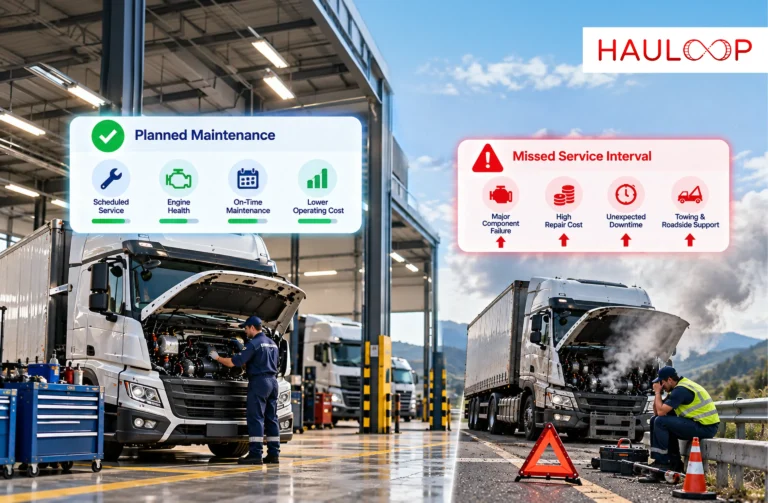
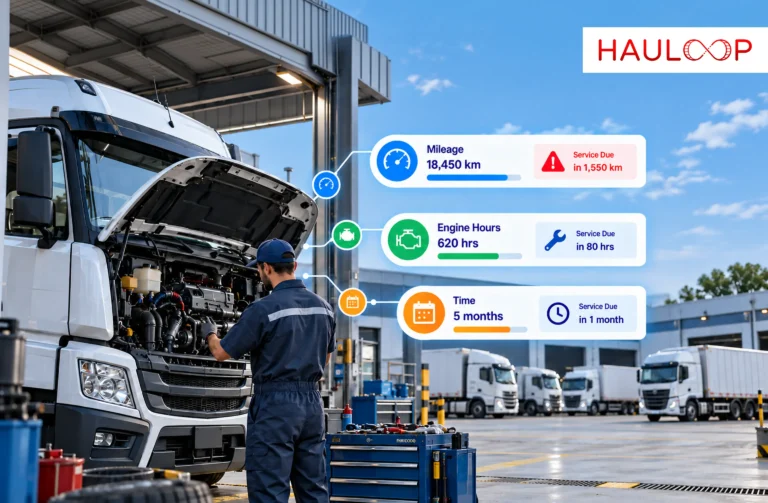
A truck with one minor maintenance warning may continue operating safely. But repeated fault codes, overdue inspections, tire-pressure issues, and unusual braking behavior can gradually increase operational risk.
The incident itself may happen in seconds. The conditions that contribute to it may have been developing for days or weeks.
That distinction matters because fleets cannot always prevent an unexpected road event. They can, however, identify many of the behaviors and operational conditions that make an incident more likely.
What Early Warning Signs can Fleet Managers Actually See?
Predicting safety risk does not mean knowing exactly when an accident will happen.
It means identifying measurable patterns that indicate risk is increasing.
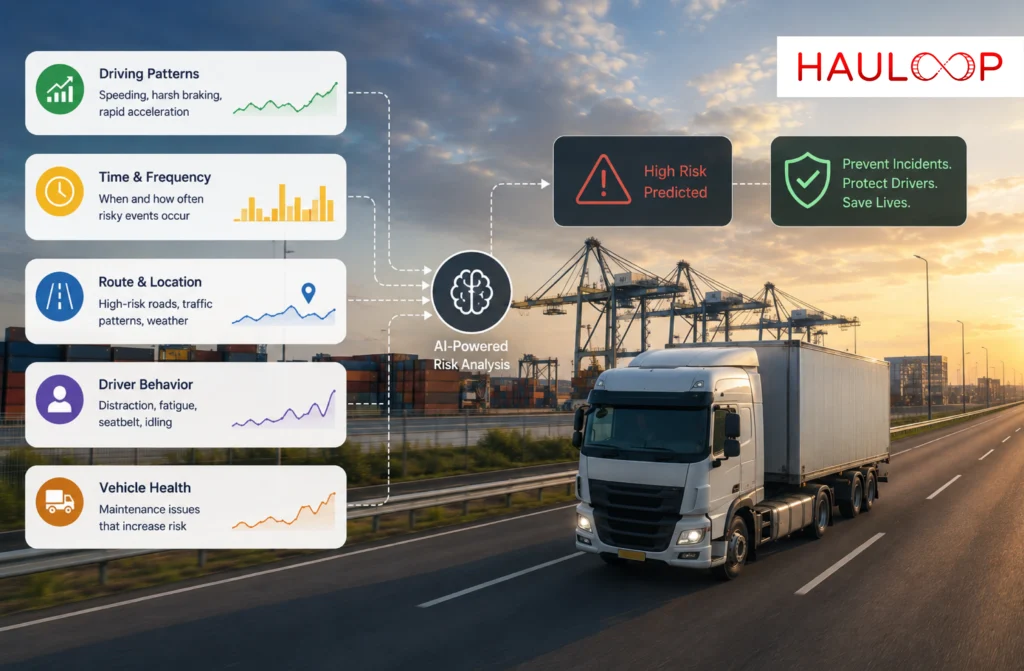
Some of the most useful warning signs come from everyday fleet activity, including repeated speeding, harsh braking, aggressive acceleration, sharp cornering, excessive driving hours, fatigue-related behavior, recurring vehicle faults, and frequent route deviations.
For example, if a driver records one harsh braking event during an emergency situation, it may have little predictive value.
If the driver records several harsh braking events every day, particularly on similar routes, the fleet has a behavioral pattern worth investigating.
This is where Harsh Event Detection becomes useful. Instead of treating every event as an isolated alert, managers can review frequency, severity, and repetition over time.
The important question changes from:
“What happened on this trip?”
to:
“What keeps happening across this driver’s trips?”
How does Driver Behavior Reveal Risk Before an Incident?
Driver behavior is one of the clearest sources of early safety signals because it can be measured repeatedly.
Speeding, harsh braking, rapid acceleration, distraction, and following-distance events are not accidents themselves. They are behaviors that may increase exposure to an accident.
A driver safety score can help summarize those events, but the underlying behavior matters more than the number.
Suppose one driver’s safety score gradually falls over six weeks.
The decline may be connected to increasing speeding events and more frequent hard braking. If the fleet manager only reviews the score after a collision, the information arrives too late.
If the trend is identified earlier, the manager can investigate the reason and provide targeted coaching.
That is the practical value of Driver Safety Scores. They help fleet teams recognize behavioral deterioration while there is still an opportunity to intervene.
Why is a Pattern More Important than a Single Alert?
Fleet operations generate many alerts.
Not every alert deserves the same level of attention.
A single speeding event might happen while overtaking. One harsh turn may be caused by an unexpected road obstruction. One late return could result from congestion.
If fleet managers react strongly to every individual event, drivers can become overwhelmed by warnings and managers can spend too much time investigating low-value exceptions.
Patterns provide better context.
Repeated speeding across several trips is more significant than one event. Harsh braking that becomes increasingly frequent deserves more attention than an isolated emergency stop. A vehicle generating the same fault code repeatedly is more important than a temporary sensor warning.
Safety prediction becomes stronger when the system looks at frequency, severity, repetition, and change over time.
That helps managers focus on developing risk rather than simply collecting alerts.
How can Fatigue become Visible Before it Causes a Problem?
Fatigue is difficult to identify from location data alone.
A vehicle can appear to be moving normally while the driver’s alertness is declining.
But fleets often have additional operational signals.
Long driving periods, insufficient rest, frequent night driving, repeated schedule pressure, and unusual driving behavior can all provide useful context.
A driver who normally operates smoothly may begin making more sudden steering corrections or braking more aggressively toward the end of long shifts.
Those changes do not prove fatigue, but they may indicate that the driver needs attention.
When Driver Safety information is combined with working hours and trip data, managers have a better opportunity to identify developing risk rather than waiting for a fatigue-related event to confirm it.
What does Vehicle Condition have to do with Safety Prediction?
Driver behavior is only one part of the risk picture.
The condition of the vehicle also matters.
A driver may operate responsibly, but worn tires, braking problems, steering issues, or unresolved fault codes can increase the chance that a normal road situation becomes dangerous.
This is why safety and maintenance data should not operate separately.
Suppose a vehicle records repeated tire-pressure warnings while also showing unusual handling behavior during trips. Each data point may appear manageable on its own. Together, they provide a stronger reason for inspection.
Similarly, recurring brake-related faults combined with frequent harsh braking events may deserve closer attention.
Connecting Vehicle Diagnostics with driver and trip information helps fleet teams identify situations where mechanical condition and operating behavior are increasing risk at the same time.
Can Route and Operating Conditions Make Incidents More Predictable?
Yes.
Sometimes the driver is not the only source of risk.
Certain routes may consistently produce sharp braking, speeding changes, congestion, difficult turns, poor road conditions, or tight delivery schedules.
If several drivers record similar safety events in the same location, the problem may not be individual driver performance.
The route itself may need to be reviewed.
For example, a delivery sequence may force drivers to rush between stops. A particular intersection may repeatedly generate harsh braking. A route may regularly place heavy vehicles on roads that are unsuitable for them.
Reviewing Trip History alongside driver events can help managers identify these recurring locations and operating conditions.
That allows the fleet to address the source of risk through route changes, schedule adjustments, or additional driver guidance.
Why does Predictive Safety Require Different Types of Fleet Data?
No single data point can explain fleet safety on its own.
GPS shows movement.
Telematics records driving events.
Maintenance systems show vehicle condition.
Driver records provide performance history.
Trip data provides route and schedule context.
The value comes from connecting them.
Imagine a driver whose speeding events are increasing. The vehicle is also overdue for service, the driver has been operating longer shifts, and several recent deliveries have had unusually tight schedules.
None of those factors guarantees an accident.
But together, they describe a higher-risk operating environment than any one metric would reveal.
This is where Predictive Insights can help fleet teams move beyond reporting what already happened and begin identifying combinations of data that deserve earlier attention.
What should Fleet Managers do with Predictive Safety Signals?
Prediction only creates value when it leads to action.
Fleet managers should not use predictive safety data to assume that an incident will happen or automatically blame a driver.
Instead, the data should help prioritize investigation.
A developing risk pattern may lead to driver coaching, a vehicle inspection, a route review, schedule adjustment, additional rest, or closer monitoring.
The goal is early intervention.
If repeated safety signals can be addressed while they are still small, the fleet has more options than it would after an incident has already occurred.
That makes predictive safety less about forecasting accidents and more about recognizing when operating conditions are moving in the wrong direction.
Conclusion
Safety incidents are not always predictable in the sense of knowing exactly what will happen and when.
But many of the conditions that increase risk can be identified much earlier.
Repeated speeding, harsh driving events, fatigue indicators, maintenance issues, route problems, and declining driver performance can all leave a measurable trail.
The more effectively fleets connect those signals, the easier it becomes to identify patterns before they result in something more serious.
That is the real purpose of predictive fleet safety: not predicting the exact accident, but recognizing growing risk early enough to change the outcome.
If your primary challenge is identifying safety risks before they become incidents, an AI Fleet Management Platform can bring driver, vehicle, trip, and behavioral data together for earlier intervention. Book a demo with Hauloop to see how predictive fleet safety can work across your operations.
Frequently Asked Questions
Can fleet safety incidents really be predicted?
Not every incident can be predicted exactly. However, fleets can identify behaviors and operating conditions associated with higher risk, such as repeated speeding, harsh braking, fatigue indicators, vehicle faults, and recurring route problems.
What are the early signs of unsafe driver behavior?
Common warning signs include repeated speeding, frequent harsh braking, rapid acceleration, aggressive cornering, distraction, unsafe following distance, and a consistent decline in driver safety performance.
How does telematics help predict safety risk?
Telematics records vehicle movement and driving events over time. Reviewing repeated behaviors and changes in frequency or severity can help fleet managers identify developing risks before a serious incident occurs.
Can vehicle maintenance data help prevent safety incidents?
Yes. Recurring faults, tire-pressure warnings, overdue servicing, brake issues, and other maintenance problems can contribute to safety risk. Combining maintenance information with driving data can provide a more complete risk picture.
Why are safety trends more useful than individual alerts?
Individual alerts may be caused by unusual circumstances. Repeated events across multiple trips are more likely to reveal a meaningful behavioral or operational pattern that requires investigation.
How should fleet managers respond to predictive safety warnings?
Predictive warnings should be used to prioritize action, such as targeted driver coaching, vehicle inspections, route reviews, schedule changes, or closer monitoring. They should support investigation rather than automatically assign blame.