By 8:15 a.m., the operations team has received an engine alert, two late-start notifications, a fuel exception, three speeding events, and a warning that one delivery may miss its time window.
Every alert may be accurate. The problem is that the team cannot act on all of them at once. Someone still has to confirm which events are real, understand their consequences, choose a response, and assign the work before the situation changes.
The cost of delayed action is already visible in fleet budgets. Recent operating-cost research found that repair and maintenance costs reached 21.5 cents per mile in 2025, up from 19.8 cents the previous year. Collecting an engine alert does not control that cost. The value begins when the alert produces an inspection, repair, or operating decision at the right time.
Hauloop’s predictive fleet insights are designed to surface developing issues and help teams act earlier. But how does fleet intelligence software move from many disconnected signals to one practical next action?
What is Fleet Intelligence Software?
Fleet intelligence software brings data from vehicles, drivers, journeys, fuel systems, maintenance records, and business workflows into a connected decision-support environment.
It does more than collect or display information. The software evaluates the reliability and context of a signal, compares it with expected behavior, estimates its urgency or impact, and presents the people managing the fleet with a suitable next step.
A useful recommendation should answer five questions:
- What happened or is likely to happen?
- Why does it matter?
- How urgent is it?
- What should be done next?
- Who is responsible for doing it?
If those questions remain unanswered, the team has received data—not an operational action.
The First Step is Confirming That the Signal can be Trusted
An action should not begin with unreliable data.
GPS signals can arrive late. Fuel levels can change on a slope. A diagnostic code may be historical rather than active. If the system reacts without validation, it creates unnecessary work and weakens confidence in future alerts.
Fleet intelligence software checks timestamps, device status, recent activity, and supporting signals. Suspected fuel loss becomes more credible when the tank drops while the vehicle is stationary, the ignition is off, and no authorized refuelling is recorded.
Hauloop’s article on context-aware fuel alerts explains why surrounding evidence matters before a team begins an investigation.
Context Changes the Meaning of the Event
After validating the signal, the software connects it with the operating situation.
A late start may be harmless if the delivery window has sufficient flexibility. The same delay may be critical if the route includes several timed stops. An engine warning may allow the vehicle to finish its current trip, or it may indicate that the vehicle should be removed from service immediately.
Context can include the driver, route, cargo, customer commitment, vehicle condition, repair history, traffic, available replacements, and current workload.
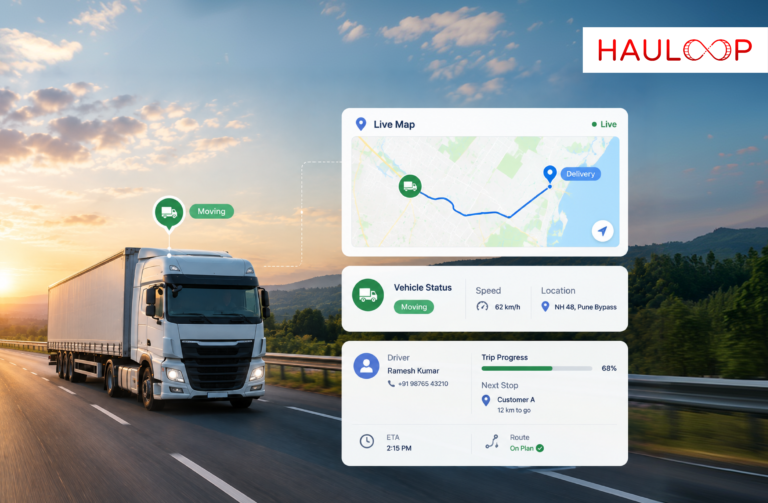
Predictive location adds forward-looking trip context by estimating arrival times and identifying likely delays. The team can then assess not only where a vehicle is, but what its current progress means for the remaining schedule.
The Software Compares the Event With Normal Operation
One unusual reading rarely provides enough evidence for a decision. Fleet intelligence software compares the current event with a relevant baseline.
That baseline should fit the vehicle and its work. Fuel use may be compared with similar trips, dwell time with previous visits to the site, and engine behavior with the vehicle’s own recent history.
This separates normal variation from a developing pattern. One delay may need monitoring; repeated delays at the same location may justify a schedule change.
This is also how fleet predictive maintenance identifies changes that may deserve attention before a visible breakdown occurs.
Urgency Depends on Operational Impact
Once an exception has been validated and placed in context, the system must decide where it belongs in the queue.
Useful prioritization considers safety, compliance, customer impact, cost, time sensitivity, and what may happen if action is delayed.
For example:
- A critical brake-related fault should take priority because of its safety consequence.
- A predicted delivery delay may be urgent because the customer can still be informed or the route adjusted.
- A gradual rise in idle time may be important but suitable for a weekly performance review.
- A low-confidence signal may be recorded without interrupting the team.
The purpose is to ensure that attention follows consequence.
A Recommendation Must be Specific Enough to Execute
“Check vehicle” is not a useful next action. Neither is “fuel consumption high.” The operator still has to determine what to check and why.
A practical recommendation might say: inspect Vehicle 18 before tomorrow’s first assignment because the same fault has appeared three times in seven days and fuel efficiency has declined on comparable routes.
That identifies the asset, timeframe, reason, and expected response. Maintenance can begin without rebuilding the analysis from several systems.
For maintenance work, the recommendation can become a digital work order with an owner, priority, required inspection, status, and completion record. The insight has now entered an accountable workflow.
The Right Action Must Reach the Right Owner
Different exceptions belong to different teams.
Dispatch handles routes and assignments. Maintenance closes vehicle defects. Safety teams review driver events, finance investigates cost exceptions, and customer service communicates changed arrival times.
The software should route the action to someone with authority to complete it. A safety-critical fault may require an immediate alert, while a low-priority utilization trend may belong in a scheduled report.
Clear ownership prevents a common failure: several people see the alert, but everyone assumes someone else is handling it.
Completion Data Closes the Decision Loop
An assigned action is not complete until its outcome is recorded.
If maintenance replaces a failing component, that result should connect to the original signal. If dispatch changes a route and the delivery arrives on time, the outcome should be retained. False alerts should also be recorded.
This creates a trail from signal to recommendation, owner, action, and result and shows which recommendations prevented delay, downtime, waste, or risk.
The same principle supports fleet maintenance scheduling: vehicle data creates value only when it becomes scheduled work and a verified repair.
Human Review Still Matters
Fleet intelligence software can evaluate more signals than a person can review manually, but it does not possess every piece of real-world knowledge. A dispatcher may know that a customer approved a later arrival, or a driver may report an unrecorded closure.
Teams therefore need enough evidence to confirm, modify, or reject a recommendation—especially when safety, compliance, or customer commitments are involved.
Conclusion: The Morning Alert Queue Becomes a Work Plan
Return to the operations team facing several alerts at 8:15 a.m. Fleet intelligence software validates the events, adds route and vehicle context, and ranks them by consequence.
The engine alert becomes an inspection assigned before the next trip. The likely delay goes to dispatch with a rerouting option and updated ETA. The fuel exception is held because its sensor data is incomplete. The speeding events become one coaching task instead of three interruptions.
The data has not disappeared. It has become a practical work plan with clear priorities, owners, and follow-up.
That is how fleet intelligence software turns operational data into the next action: validate the signal, understand the context, judge the impact, recommend a response, assign responsibility, and record the outcome.
Hauloop is an AI Powered Fleet Management Software that connects fleet signals with the workflows needed to act on them. Turn your next alert into a clear operational decision Book a Demo.
Frequently Asked Questions
What does fleet intelligence software do?
It connects operational data, identifies exceptions, assesses likely impact, and helps teams decide what should happen next and who should act.
What types of data can fleet intelligence software analyze?
It can analyze GPS, routes, ETAs, diagnostics, maintenance, fuel, driver behavior, inspections, delivery status, utilization, and cost data.
How does the software decide which alert is most urgent?
Priority may reflect safety, compliance, customer impact, cost, time sensitivity, data confidence, and the risk of delay.
Can fleet intelligence software create maintenance work orders?
Yes. A validated vehicle-health signal can become a work order with an owner, priority, inspection requirement, status, and completion record.
Can an operator reject a software recommendation?
Yes. Human review remains important because fleet teams may have operational context that is not available in the system. The supporting data should make recommendations understandable and reviewable.
How can a fleet measure whether the recommendations are useful?
Track each recommendation through completion, then measure downtime avoided, on-time delivery, fuel savings, repeat events, safety improvement, and response time.