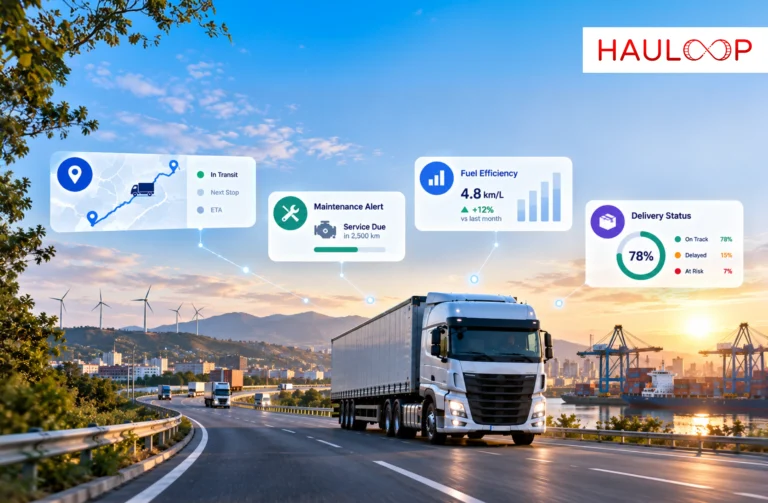
The operations dashboard shows three separate problems. One vehicle has been idling for 47 minutes. A delivery is likely to miss its time window. Another vehicle has produced an engine fault.
All three alerts are visible, but the team still has to work out which problem matters most, what caused it, who should respond, and whether acting now will prevent a larger cost. The dashboard has displayed the data. It has not made the decision easier.
This distinction has a direct financial impact. Recent trucking cost research found that the average cost of operating a truck reached $2.336 per mile in 2025, the highest per-mile figure in the report’s history. When every mile carries that level of cost, teams need to understand which issue deserves attention—not simply see more information.
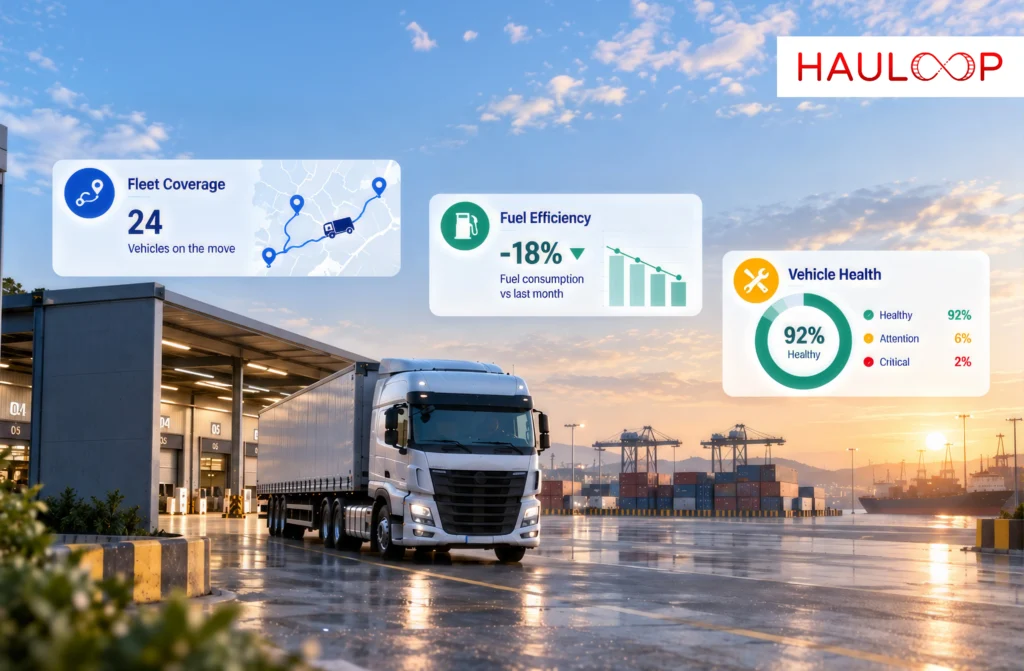
Hauloop’s fleet intelligence layer connects signals across vehicles, drivers, trips, fuel, maintenance, and cost. So, what turns that connected information into intelligence rather than another screen full of numbers?
What is Fleet Intelligence?
Fleet intelligence is the process of converting operational fleet data into context, priorities, and decisions.
It brings together vehicle, driver, trip, fuel, maintenance, delivery, and cost information. It then helps the fleet understand what is happening, why it matters, what could happen next, and which response is appropriate.
A dashboard presents this information. Fleet intelligence is the reasoning layer behind the view.
The difference can be expressed simply:
- Data reports that a vehicle has stopped.
- A dashboard displays the stop duration.
- Fleet intelligence recognizes that the stop is outside the planned route, is delaying a priority delivery, and needs dispatch attention.
The value does not come from seeing more data. It comes from understanding what the data means for the operation.
A Dashboard Shows Events; Intelligence Connects Them
A fleet dashboard may display dozens of accurate metrics without explaining the relationship between them.
For example, rising fuel consumption, excessive idling, and repeated delays may appear in separate reports. Connected together, they may reveal one cause: vehicles are regularly waiting at the same customer site with their engines running.
A custom fleet dashboard becomes more useful when its KPIs are connected to operating context. Managers can move from “fuel use increased” to “fuel use increased on these routes because dwell time rose at these locations.”
That connection is what turns a metric into an explanation.
Location Only Becomes Useful When the System Understands the Trip
A GPS position is a fact, but it does not automatically explain whether the vehicle is on time, on route, productive, or at risk.
The same stationary vehicle may be completing a delivery, waiting in traffic, taking an approved rest period, idling unnecessarily, or experiencing a breakdown. Location becomes meaningful only when compared with the route, schedule, geofence, driver status, and vehicle condition.
This is why live fleet tracking should provide more than a moving icon. Fleet intelligence uses trip context to distinguish normal activity from an exception that may require action.
Fleet Intelligence Explains Why a Number Changed
Traditional reporting often starts and ends with the result. Fuel cost is higher. Vehicle utilization is lower. Late deliveries have increased.
Fleet intelligence investigates the drivers behind that change.
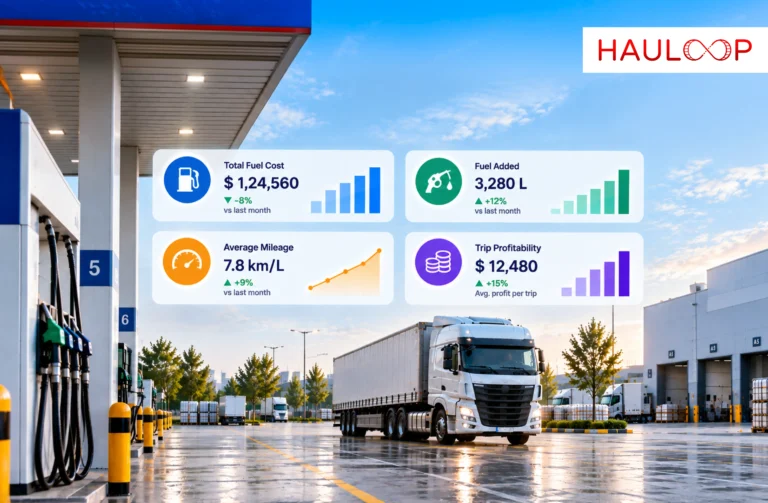
If fuel cost rises, the system should help determine whether the cause is price, distance, idling, route choice, driving behavior, vehicle condition, unauthorized use, or a change in workload. Hauloop’s guide to fuel management software shows why litres consumed cannot explain those differences on their own.
The same logic applies elsewhere. A falling safety score may reflect repeated speeding on one route rather than a fleet-wide problem. Useful intelligence narrows the question until the team can identify a plausible cause.
Not Every Exception Deserves the Same Priority
A fleet can generate more alerts than its team can investigate. Treating every exception as urgent creates alert fatigue and can bury the problem needing immediate attention.
Fleet intelligence should assess urgency and impact. A small rise in idle time may suit a weekly review. A critical fault on a vehicle carrying a time-sensitive load may require immediate intervention.
This is also why driver safety scores need context. A score can help identify a pattern, but the fleet still needs to understand the events behind it and choose the right response.
Intelligence reduces noise by ranking issues according to likely consequence, time sensitivity, and the fleet’s own operating priorities.
Insight Must Reach the Person Who Can Act
An insight has little operational value if it remains inside a dashboard that nobody is reviewing at the right time.
Dispatch may need an immediate delay warning. Maintenance may need a vehicle-health exception before tomorrow’s assignments. Finance may need a weekly cost trend, while management may need a monthly performance summary.
Automated fleet reports can deliver relevant information on a defined schedule, but the timing and audience must match the decision. The same information should not be sent to everyone in the same format.
Hauloop can also generate a report as soon as a trip ends. Operations teams do not need to wait until the end of the month to understand what happened. The completed-trip report can bring together distance, duration, stops, idling, route performance, and related cost information while the journey is still recent.
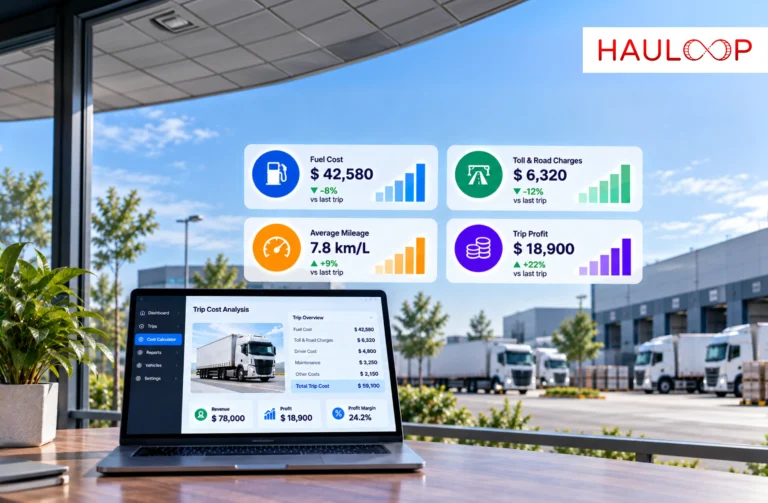
Connected vehicle cost analysis can then show cost by individual vehicle, route, or trip. A monthly fleet total may show that spending increased; these more specific views help identify exactly where the increase occurred.
Fleet intelligence supports action when it gives the right person enough context to make a decision within the available time.
Intelligence Improves When the Outcome is Recorded
The process should not stop after a recommendation is made.
If the system highlights abnormal fuel use, the fleet should record whether the cause was idling, a sensor issue, driver behavior, or a mechanical problem. A completed inspection or repair should also connect to the signal that triggered it.
These outcomes show which indicators were useful, which alerts were misleading, and which actions improved performance. Thresholds and priorities can then be refined around actual fleet operations.
Without this feedback, the platform keeps presenting events. With it, fleet intelligence becomes a repeatable decision process.
Conclusion: From Three Alerts to One Clear Priority
Return to the three problems in the opening: prolonged idling, a likely late delivery, and an engine fault. A dashboard can show all three. Fleet intelligence adds the context needed to decide what happens next.
It may identify the engine fault as a low-risk advisory, connect the idling to an approved loading delay, and show that the late delivery will affect a high-priority customer unless dispatch acts now. The team no longer has three unexplained alerts. It has one immediate priority and two events that can be handled through the appropriate workflow.
That is what fleet intelligence means beyond another dashboard: connected data that explains the situation, filters the noise, and makes the next decision clearer.
Hauloop is an AI Powered Fleet Management Software that brings fleet data, operational context, and decision support into one connected environment. See how your fleet’s data can become clearer priorities Book a Demo.
Frequently Asked Questions
What is fleet intelligence?
Fleet intelligence is the use of connected vehicle, driver, trip, fuel, maintenance, safety, and cost data to explain fleet performance, identify risks, prioritize exceptions, and support operational decisions.
Is fleet intelligence the same as fleet tracking?
No. Fleet tracking primarily shows location and movement. Fleet intelligence combines it with operational data to explain what the activity means and whether a response is needed.
How is fleet intelligence different from a dashboard?
A dashboard presents metrics and events. Fleet intelligence connects them, adds context, identifies patterns, and helps determine which issue matters.
Can fleet intelligence show cost by trip or route?
Yes. When operational and cost data are connected, Hauloop can show cost by vehicle, route, and completed trip. This helps teams locate the source of a cost change instead of relying only on a fleet-wide monthly total.
Can fleet intelligence reduce alert fatigue?
Yes. A well-configured system can group related events, filter normal activity, and prioritize exceptions by urgency and business impact. Human review is still important for unusual or high-risk decisions.
Does fleet intelligence replace fleet managers?
No. It helps managers interpret complex operational information more quickly. People remain responsible for reviewing the context, making decisions, communicating with teams, and assessing the outcome.