A trailer leaves the yard with a numbered seal fixed to its door. Three states later, it reaches the consignee with the same seal number still attached.
On paper, the trailer was never opened. During unloading, however, several cartons are found to be missing.
The matching seal cannot explain where the shortage occurred. It has no timestamp, location or access history. It also cannot confirm whether the correct quantity was loaded before the vehicle left.
The financial risk behind that uncertainty is increasing. Verisk CargoNet recorded 677 supply-chain theft incidents across the United States and Canada in the second quarter of 2026. That was 26% fewer than a year earlier, yet estimated losses more than doubled to $304.6 million. The same report recorded 158 fictitious-pickup incidents, showing that cargo can also be released to the wrong party without anyone forcing open a trailer.
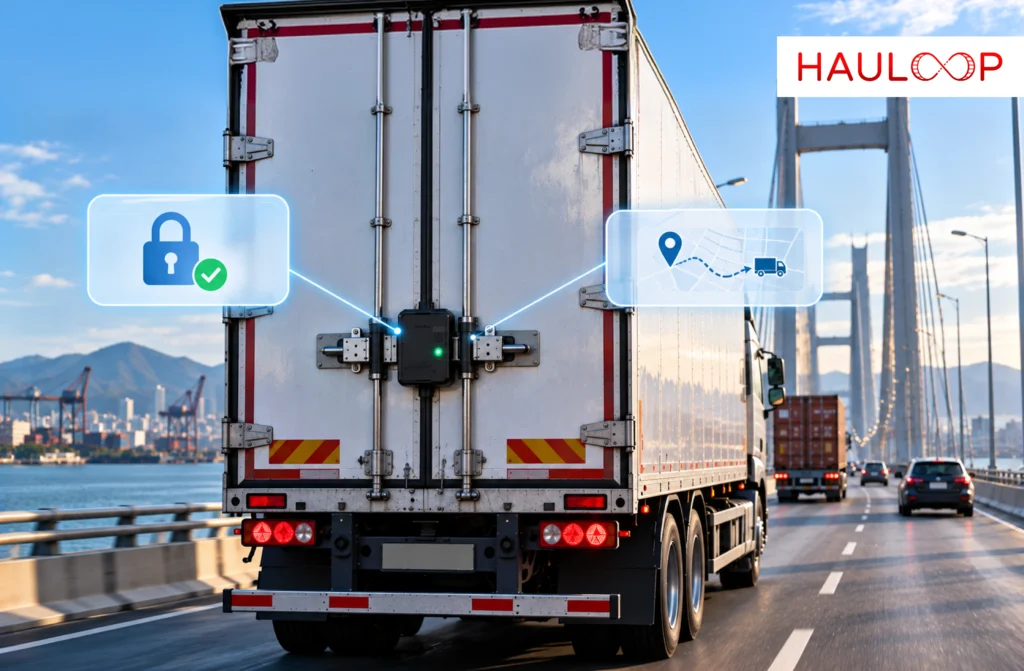
An e-lock provides evidence that a numbered seal cannot. It can record when the cargo door was locked or unlocked, where the event occurred and whether the action was authorised. When connected with the trip, vehicle location, manifest and delivery record, those events help the fleet investigate a shortage.
But an e-lock does not prove everything. Understanding its limits is the first step towards building a custody record that can stand up when cargo goes missing.
What an E-Lock Proves and What it cannot Prove?
An electronic cargo lock, or e-lock, controls and records access to a trailer, container or cargo compartment. Depending on the device and configuration, access may be authorised remotely, through a one-time password or by another approved method.
The lock record can show:
- When the cargo area was locked and unlocked
- Where each access event was reported
- Whether the unlock followed an authorised instruction
- Whether the device detected a forced opening or tamper attempt
- Which vehicle, trip or shipment was connected to the event
That is valuable evidence, but it has a clear boundary. A lock event does not prove how many cartons were inside. A closed door does not confirm that the correct cargo was loaded, and an opening does not by itself prove that goods were removed.
The digital cargo lock therefore forms one part of the custody record. The manifest, loading confirmation, vehicle movement and final handover must provide the rest.
A Matching Seal Number does not Explain the Journey
A conventional seal provides a visible sign that the cargo door was secured. If it is broken or missing, the team knows the door may have been opened.
The difficulty begins when the seal still appears intact. A seal can be replaced, copied or checked too late. Even when it works exactly as intended, it cannot tell the fleet when or where an incident happened.
An e-lock adds a timeline. If the cargo area opens at 2:14 a.m. outside an approved stop, the event can be recorded with its reported location. If it remains locked until the consignee receives the vehicle, that history supports the journey record.
This does not make the lock infallible. Device condition, power, connectivity and data quality still matter. It does, however, replace a visual check at the end of the route with access evidence captured during the trip.
Link Every Unlock to the Right Person, Place and Trip
The strongest control is not simply keeping the door locked. It is controlling who can open it and under what conditions.
Before dispatch, the e-lock should be associated with the correct vehicle, trip and consignment. The approved delivery locations and access process should also be defined. Unlock authority can then be limited to dispatch, an authorised recipient or another named person according to the fleet’s workflow.
Geofencing adds location control. Where the lock and integration support it, an unlock can be permitted only inside an approved pickup, transfer or delivery zone. An attempt outside that area can be blocked or treated as an exception.
Reliable fleet geofencing helps the team compare the event with the operational boundary. It does not prove that unloading occurred, but it helps establish whether access took place where it was expected.
Identity still matters. The 158 fictitious-pickup incidents reported in Q2 2026 show why secure access cannot depend on location alone. If authority is issued to an impersonator, the lock may open normally for the wrong person. Driver, carrier and recipient verification must remain part of the release process.
Alert Dispatch Before an Unauthorised Opening Becomes a Shortage
A tamper event found in a report after delivery explains part of the loss. An alert received while the truck is moving gives the team a chance to respond.
If the device detects an opening outside the authorised time or location, dispatch should receive the exception promptly. The team can contact the driver, check the vehicle’s position, confirm whether the stop was planned and escalate the incident when necessary.
The same approach applies when the vehicle deviates from its route or remains at an unexplained stop before an access event. Our guide to active trip tracking explains why fleet visibility becomes more useful when it highlights the event that needs action.
Real-time alerts depend on device power, reporting intervals and network coverage. Some compatible devices can store events during a connection loss and upload them later. That protects the historical record, but it does not turn a delayed upload into a live warning. The system should show the difference clearly.
Compare the E-Lock Location with the Vehicle’s GPS
An e-lock with its own location source produces one position for the access event. The vehicle’s telematics unit may produce another.
Where both data feeds are available and integrated, the two positions can be compared. Under normal conditions, they should place the lock and vehicle in the same operating area. A meaningful mismatch should be reviewed.
For example, the lock may report an unlock at a location the vehicle’s trip history does not show. That does not automatically prove spoofing or theft. It may result from weak GPS accuracy, delayed transmission, incorrect device assignment or the lock being separated from the vehicle. Each possibility requires investigation.
The benefit is that the fleet is not relying on one device as its only source of location evidence. Live fleet tracking supplies the vehicle timeline, while the e-lock supplies the access event. Agreement strengthens the record; disagreement identifies the point that needs attention.
Connect Access Events with the Manifest and Delivery Record
Return to the trailer with the missing cartons. Even a complete lock history cannot establish whether the shortage happened in transit unless the starting quantity is known.
The Cargo & Delivery workflow should connect the access history with:
- The consignment and manifest reference
- The quantity confirmed at loading
- Every approved stop and transfer
- Lock, unlock and tamper events
- The quantity accepted at delivery
- Shortages, damage or refusals recorded during handover
Our article on cargo custody explains why vehicle location alone cannot prove who controlled the goods. The same principle applies to a lock: access data becomes stronger when it is connected with the people and quantities involved.
The final proof of delivery completes the sequence. It records who received the load, when and where the handover occurred, what quantity was accepted and whether an exception was reported.
Keep the Custody Record Ready for Claims and Audits
The value of an e-lock record often becomes clear days or weeks after the trip. A customer disputes a shortage, an insurer reviews a claim or a compliance team asks who accessed a hazardous load.
At that point, the answer cannot depend on the driver remembering every stop. The fleet needs a retrievable timeline showing the assigned lock, authorised users, lock and unlock events, reported locations, tamper alerts, vehicle movement and delivery acknowledgement.
This evidence is particularly useful for high-value freight, hazardous cargo and dedicated contract loads where custody requirements are written into customer agreements. The exact evidence required for an insurance or regulatory review will vary, so the workflow should be configured around the applicable contract and jurisdiction.
An e-lock record supports the investigation. It does not replace carrier verification, secure-yard procedures, driver instructions, manifests, insurance requirements or proof of delivery.
Conclusion: Replace an Intact Seal with a Verifiable Custody Timeline
The trailer in the opening example arrived with the same seal number but fewer cartons. The seal could not show whether the cargo door had been opened, where access occurred or whether the correct quantity had been loaded.
An e-lock provides the missing access history. It can show when and where the cargo area was locked or unlocked, whether the event was authorised and whether tampering was detected. Comparing that event with the vehicle’s GPS, trip route and approved zones makes the record stronger.
The final answer still comes from the complete custody timeline. If the manifest confirms the starting quantity, the e-lock shows no unexplained access and the recipient records a shortage, the fleet knows to investigate loading, counting and handover records. If an unauthorised opening appears during the trip, the team has a clear event, time and location to examine.
That is what an e-lock proves when cargo goes missing: not that theft definitely occurred, but who was authorised to open the load, when and where access was reported, and whether the journey contained an unexplained custody event.
AI-powered fleet management software can connect cargo access, vehicle movement, trip records and delivery evidence in one operational view. Book a Demo to see how a digital custody timeline can help your team investigate shortages with clearer evidence.
Frequently Asked Questions
What is an e-lock in cargo transportation?
An e-lock is an electronic locking device used on a trailer, container or cargo compartment. Depending on its configuration, it can control access, record lock and unlock events, report location and alert the fleet to possible tampering.
How does a GPS e-lock work?
A GPS e-lock combines electronic access control with location reporting. Authorised users can unlock it through the supported process, while the device records the event’s time, status and reported position. Available functions depend on the hardware and integration.
What is the difference between an e-lock and a container seal?
A container seal provides visible evidence of possible interference but normally has no digital event history. An e-lock can record access activity and generate alerts. Neither one independently proves the cargo quantity or condition inside the container.
Can an e-lock prevent cargo theft?
An e-lock can restrict access, deter interference and alert the fleet to suspicious events, but it cannot prevent every form of theft. Fictitious pickups, identity fraud, loading errors and authorised misuse require additional identity, manifest and handover controls.
Does an e-lock work without network coverage?
Some devices can continue locking and store events locally when network coverage is unavailable, then upload the data after reconnection. This depends on the device’s memory, power and configuration. Live alerts cannot be assumed while communication is unavailable.
What should an e-lock audit trail include?
The trail should identify the lock, vehicle, trip, shipment, authorised user, event type, timestamp and reported location. It should also include tamper alerts, connectivity gaps, route context and the related loading, transfer and delivery records.