A delivery is marked as completed. The vehicle reached the destination, the cargo was unloaded, and the driver continued to the next stop.
Then the customer says, “The cargo was not delivered.”
The tracking system confirms that the vehicle reached the address. But it cannot prove what was unloaded, who received it, or whether the complete order was accepted.
This is a significant last-mile problem. Project44 data reported by Wise Systems found that deliveries with missing items accounted for 22.4% of customer complaints in April 2023. Damaged items represented another 20.9%. These figures do not mean incomplete documentation caused every complaint, but they show how frequently delivery outcomes are questioned.
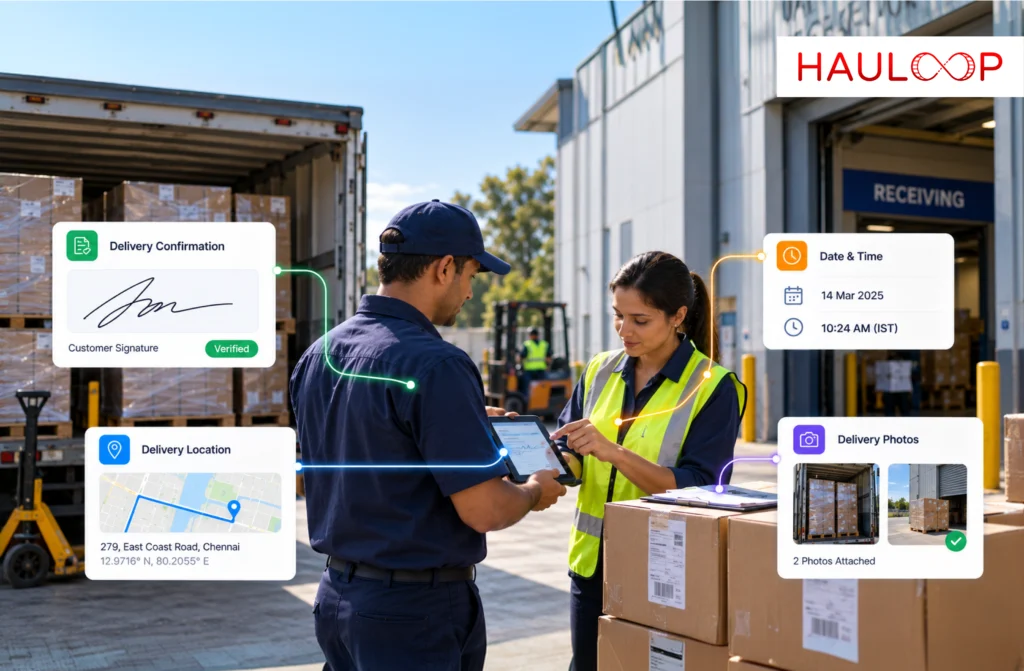
Hauloop’s Cargo & Delivery module captures the customer’s e-signature and records the handover digitally. But what else must proof of delivery contain before it can help resolve a dispute?
What is Proof of Delivery and What does it Confirm?
Proof of delivery, commonly known as POD, is the record created when cargo is handed over to the recipient. It confirms that a delivery took place and documents how the goods were accepted.
Traditional POD may be a signed paper document. Digital proof of delivery can connect the signature with the consignment, recipient, time, location, quantity, photographs, and delivery status.
The purpose of POD is not simply to show that the driver completed a stop. It should create a reliable account of the moment responsibility for the cargo passed from the fleet to the recipient.
Why a “Delivered” Status Cannot Resolve a Dispute?
A delivered status usually means the driver closed the task. It does not automatically mean the correct cargo reached the correct person.
The vehicle may have arrived at the customer’s location while part of the order remained at the depot. The cargo may have been unloaded at the wrong entrance, accepted by an unauthorized person, or received with an unrecorded shortage.
Vehicle tracking provides important journey context, but location alone cannot confirm the handover. As explained in our guide to real-time fleet tracking, fleet teams need operational events alongside map data to understand what happened during a trip.
A defensible POD must therefore connect the completed status with evidence from the delivery itself.
What Must a Dispute-Ready POD Capture?
When a customer questions a delivery, the record should answer five basic questions:
- What cargo was delivered?
- Who accepted it?
- Where did the handover occur?
- When was it completed?
- Was any problem reported?
To answer them, the POD should include the order or consignment reference, recipient’s name, e-signature, date, time, verified location, expected quantity, accepted quantity, and final delivery status.
Where appropriate, the record may also contain photographs, package-condition details, driver notes, and reasons for partial acceptance or refusal.
These details should be recorded during the handover. Information entered later is less reliable because the driver and recipient may remember the event differently.
Connect the POD to the Exact Cargo Delivered
A signature may prove that the customer received something. It does not prove that every item assigned to the delivery was handed over.
The POD must be connected to the correct order, consignment, or manifest. A digital manifest gives the driver and operations team a common record of the cargo allocated to each stop.
If the manifest shows 20 cartons but the customer accepts only 18, the driver should record the accepted quantity and mark the delivery as partial. The missing cartons can then be investigated without incorrectly treating the entire order as completed.
This connection allows the fleet to compare the customer’s claim with the exact cargo loaded, assigned, and acknowledged at the destination.
Verify Who Received the Cargo, Where, and When
An unreadable signature is weak evidence if nobody can identify the person who provided it. The POD should capture the recipient’s full name and e-signature. Some deliveries may also require a job title, employee number, or other confirmation that the person was authorized to receive the goods.
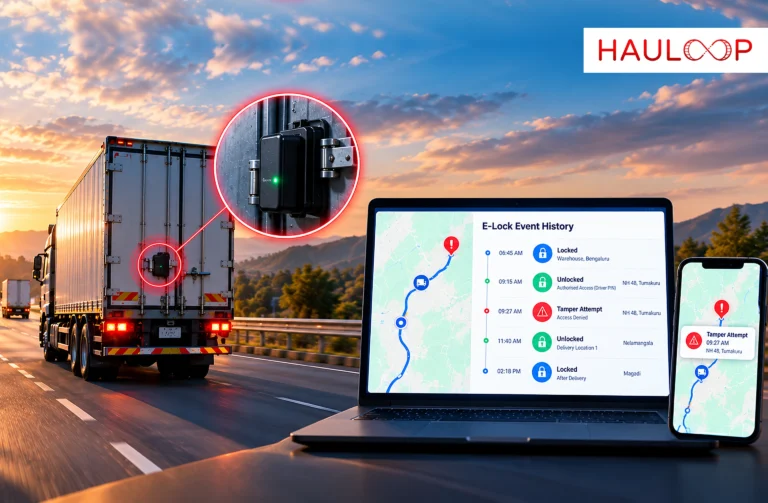
The location and timestamp should be recorded with the same handover. Reliable fleet geofencing helps confirm that the vehicle entered the correct customer site rather than merely passing close to the address.
Stop duration provides further context. If the vehicle entered the delivery zone, remained there long enough for unloading, and the POD was submitted before departure, the events support one another. Accurate stop recognition helps separate a genuine delivery visit from traffic or a brief roadside stop.
Record Problems Before the Driver Leaves
Not every handover ends with the full order being accepted in good condition. Cargo may arrive damaged, quantities may be short, or the recipient may refuse the delivery.
These exceptions should be documented while the driver and recipient are still at the site. The record should identify the expected and accepted quantities, the type of damage, the reason for refusal, and the person acknowledging the issue.
Photographs can support the record by showing damaged packaging, seal condition, or where the goods were placed. The delivery status should then be marked accurately as complete, partial, damaged, or refused.
Immediate exception capture protects both parties. The customer does not have to confirm a faultless delivery, and the fleet receives a shared account of the issue before the driver leaves.
How Does a Complete POD Resolve the Customer’s Claim?
Return to the opening situation: the system shows “delivered,” but the customer says the cargo never arrived.
With a complete POD, the fleet can open one delivery record and verify:
- The consignment assigned to the stop
- The quantity accepted
- The recipient’s name and e-signature
- The delivery time and location
- Any photographs or exception notes
- The history of changes made to the record
A digital audit trail can help show when the delivery record was created or updated. This prevents important evidence from being scattered across paper slips, driver phones, messages, and spreadsheets.
If the complete cargo was accepted without an exception, the fleet can respond with documented evidence. If the POD records a shortage or damage, the team can identify what went wrong and investigate the correct stage of the delivery.
The purpose is not to argue with every customer. It is to give both parties a verifiable record from which the issue can be resolved fairly.
Conclusion: From “Delivered” to Verifiably Delivered
A delivery status confirms that a task was closed. Reliable proof of delivery confirms what actually happened during the handover.
By connecting the cargo, recipient, e-signature, quantity, time, location, condition, and exceptions, fleets can replace conflicting accounts with one verifiable delivery record.
Hauloop is an AI Powered Fleet Management Platform that brings cargo visibility and delivery documentation into one operational view. Make every completed delivery easier to verify Book a Demo.
Frequently Asked Questions
What is proof of delivery?
Proof of delivery is a record confirming that cargo was handed over to a recipient. It may include the consignment reference, recipient’s name, e-signature, time, location, accepted quantity, delivery status, photographs, and exception notes.
Is a customer signature enough to prove delivery?
A signature confirms acknowledgement, but it may not prove what was delivered or whether the signer was authorized. It becomes stronger when connected to the consignment, named recipient, location, timestamp, quantity, and delivery status.
Can GPS data replace proof of delivery?
No. GPS data can confirm that a vehicle reached the delivery location, but it cannot prove that the correct cargo was unloaded and accepted. It should support the POD rather than replace it.
What should happen when only part of an order is delivered?
The driver should record the expected and accepted quantities, identify the missing items, obtain the recipient’s acknowledgement, and mark the delivery as partial instead of complete.
Why should delivery exceptions be recorded immediately?
Immediate recording captures what the driver and recipient observed at the handover. It makes shortages, damage, refusals, and partial deliveries easier to verify and investigate later.
How does digital POD help resolve disputes?
Digital POD keeps the recipient, e-signature, time, location, quantity, photographs, and exception details in one record. Fleet teams can retrieve the evidence quickly instead of relying on paper documents or conflicting accounts.