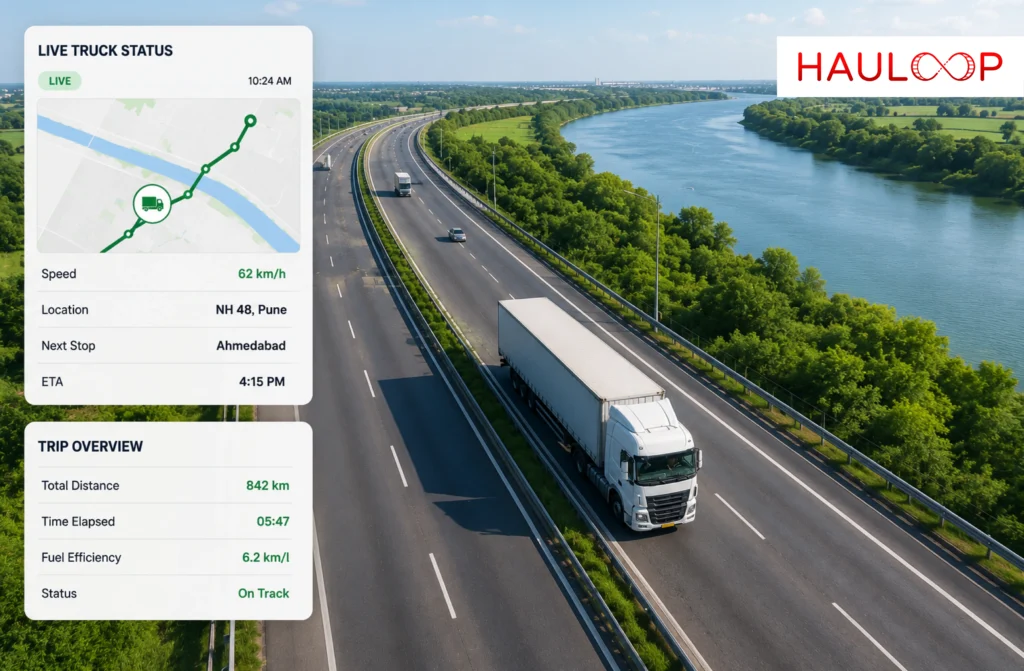
A truck leaves the depot at 7:30 a.m. The driver has the route, the customer expects delivery by noon, and dispatch marks the trip as underway.
At 11:15, the customer asks for an update.
Knowing the truck left the depot nearly four hours ago does not tell you whether it is 10 miles away, sitting in traffic, waiting at the previous stop, or running behind schedule. The trip started on time, but that does not mean it is progressing on time.
This is why real-time live tracking matters in modern fleet operations. Departure information confirms that a journey started. Real-time visibility helps dispatchers understand what is happening between departure and delivery, while there is still time to respond.
Why is Departure Information No Longer Enough?
For years, many transport operations have relied on milestone updates. A vehicle is dispatched, the driver provides an update somewhere along the route, and another status is recorded when the delivery is completed.
The problem is everything that happens between those milestones.
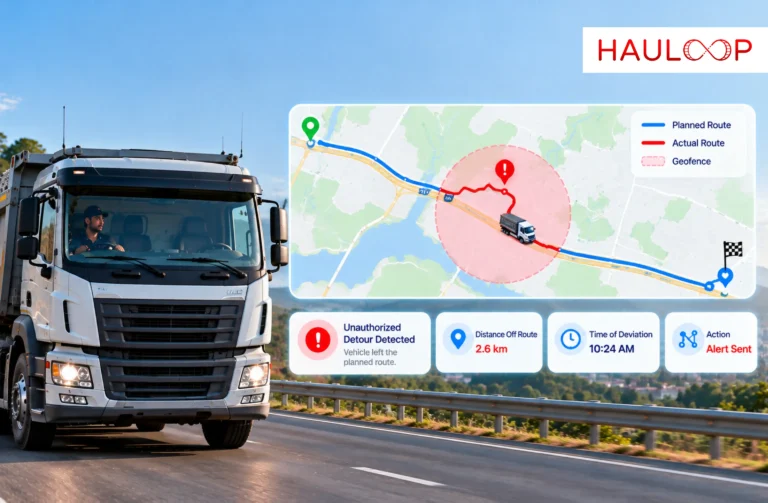
Traffic builds. Loading takes longer than expected. A driver stops unexpectedly. A vehicle deviates from the planned route. The next delivery window starts getting tighter.
If those events are only discovered through calls or messages, dispatch is always waiting for someone on the road to explain what is happening.
Real-time tracking closes that visibility gap by continuously showing vehicle movement throughout the trip. Instead of knowing only where the truck started and where it eventually arrived, teams can understand how the journey is actually progressing.
What does Real-Time Tracking Add to Fleet Visibility?
The value of real-time tracking is not simply seeing a moving dot. It is the operational context around that movement.
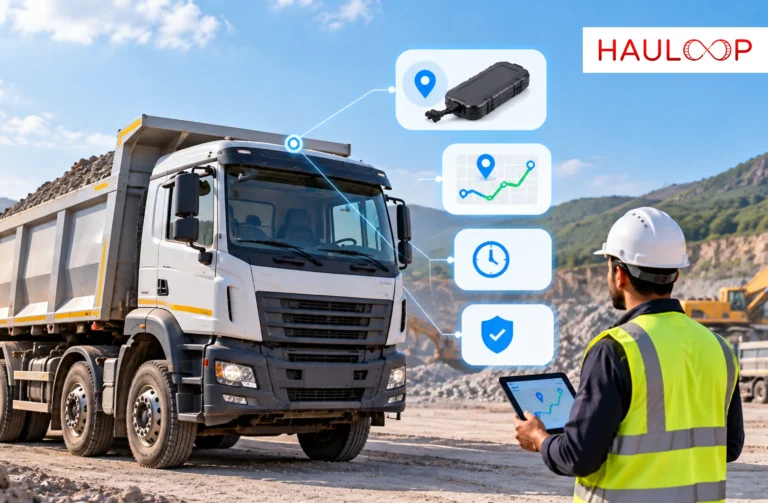
A connected fleet tracking system can help teams see whether a vehicle is moving, stationary, idling, or progressing differently from what was planned. When this information is connected with the trip, driver, route, and destination, a location update becomes much more useful.
For example, if a vehicle has stopped moving, the tracking system should not immediately treat it as a delay or idle-time problem. The truck may be completing a delivery, waiting at an approved stop, or temporarily held up by traffic. Real-time tracking becomes more useful when the location is combined with trip and route context, so dispatch can tell the difference between a normal stop and one that needs attention.
Real-time visibility helps dispatch determine which situation applies before deciding whether action is needed.
This changes tracking from a location-checking tool into part of the daily fleet workflow.
Why does Real-Time Visibility Matter During an Active Trip?
Most trip problems do not begin at the delivery point. They develop somewhere along the journey.
A 15-minute delay at the first stop may affect the second. Another slowdown can put the third delivery window at risk. If dispatch only becomes aware when the customer calls, there may be little left to do.
With Live Map Tracking, the operations team can follow active vehicle movement and identify trips that are no longer progressing normally.
The practical benefit is earlier awareness.
A dispatcher managing 40 active vehicles does not need to call all 40 drivers. The team can focus on the handful of trips showing unusual stops, slower progress, route deviations, or other exceptions.
That saves time while allowing drivers who are operating normally to continue without unnecessary interruptions.
How do Geofences Turn Location into Useful Events?
Knowing that a truck is at a particular coordinate has limited meaning unless the system understands what is located there.
That is where Geofencing & Zone Alerts become useful.
A fleet can create virtual boundaries around depots, customer locations, warehouses, restricted areas, or other important operating zones. Vehicle movement can then be monitored against those boundaries.
Instead of asking a driver whether they reached the warehouse, the system can detect the vehicle entering the defined zone. It can also identify when the truck leaves, stays longer than expected, or moves outside an approved operating area.
This turns location into events that operations teams can use:
Arrival → Dwell → Departure → Route continuation
For busy transport operations, automatically identifying these events reduces dependence on manual status updates.
Why do Stops and Idling Need Real-Time Attention?
Not every delay comes from traffic or route problems. Sometimes productivity is lost while the vehicle is stationary.
A truck may spend longer than expected at a customer site. Another may idle unnecessarily between jobs. A third may stop somewhere that is not part of the planned journey.
Individually, these events can appear minor. Repeated across dozens of vehicles and hundreds of trips, they can affect fuel consumption, vehicle utilization, driver hours, and delivery performance.
Speed & Idle Alerts help surface these exceptions while the trip is active.
The goal is not to alert managers every time a vehicle stops. Fleet teams need enough context to distinguish a legitimate operational stop from activity that deserves attention.
That makes real-time tracking particularly useful for exception management: normal trips continue in the background while unusual activity moves to the foreground.
How does Real-Time Tracking Improve ETA Management?
An ETA calculated before departure is based on what was known at that moment.
The road does not remain unchanged.
Traffic conditions shift, stops run long, routes change, and vehicle progress varies. A delivery expected at noon when the truck departed may no longer be realistic two hours later.
Connecting live movement with ETA Management allows arrival expectations to change as the trip develops.
That gives dispatch teams time to communicate earlier with customers and coordinate downstream activities.
Instead of:
“The truck left this morning.”
The conversation becomes:
“The vehicle is progressing toward your location, but the current trip conditions have changed the expected arrival time.”
That is much more useful to a customer planning staff, dock availability, unloading, or the next stage of a delivery.
What Happens When You Need to Understand a Completed Trip?
Real-time tracking is valuable during the journey, but fleet visibility should not disappear once the delivery is completed.
Suppose a customer says the vehicle arrived late, while the driver repo problem.
How Does Real-Time Tracking Support Better Fleet Decisions?
The biggest difference between historical location information and real-time tracking is when the information becomes useful.
Historical data helps explain what happened.
Real-time data can help influence what happens next.
Consider a truck that has fallen behind schedule but still has three deliveries remaining. If the problem is identified early, dispatch may be able to adjust the stop sequence, update customers, revise the route, or coordinate another operational response.
If the same information arrives after the final delivery, it can only be reviewed.
This is also where Predictive Location extends real-time visibility. By combining current vehicle movement with historical trip and route patterns, fleet technology can help identify developing delays and expected arrival risk before the outcome is certain.
The progression becomes:
Where did it leave? → Where is it now? → What is happening? → Is it on plan? → What is likely to happen next?
That is the difference between recording fleet movement and actively managing it.
What should Real-Time Fleet Tracking Help Your Team Do?
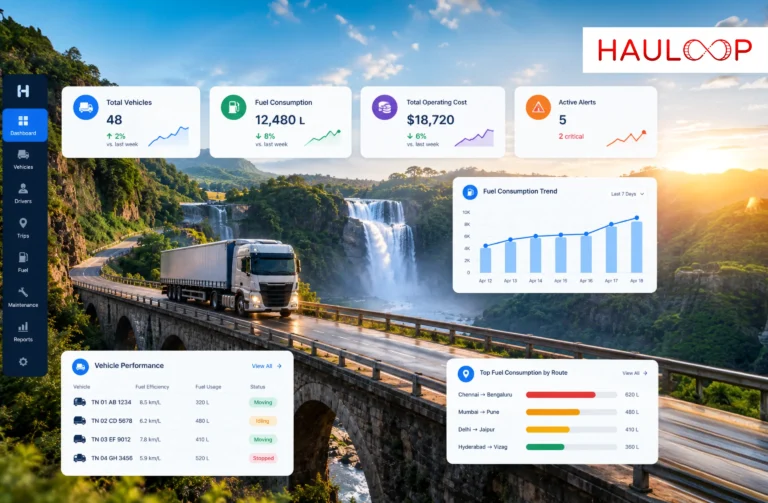
The right system should make day-to-day fleet coordination easier, not simply add another dashboard.
For transport managers and dispatch teams, useful real-time tracking should help them:
- See active vehicles and trip status from one connected view
- Identify unexpected stops, idling, and route deviations earlier
- Monitor arrivals and departures at important operating zones
- Understand whether trips are progressing according to plan
- Keep ETAs current as journey conditions change
- Review completed journeys when an issue needs investigation
- Focus attention on exceptions instead of constantly chasing every driver
The outcome is not more tracking for the sake of tracking. It is better operational control between dispatch and delivery.
Conclusion
Knowing that a truck left the depot answers one question: Did the trip start?
Real-time tracking answers the questions that follow. Where is the vehicle now? Is it moving as expected? Has it stopped too long? Is it following the route? Is the delivery likely to be late? Does the operations team need to intervene?
That continuous visibility matters because fleet problems rarely wait until the end of a journey to develop. The earlier a team can see a change in movement, timing, or route progress, the more options it has to respond.
If your fleet needs better visibility between dispatch and delivery, an AI Fleet Management Platform can connect live vehicle movement with trip status, alerts, ETAs, and operational context. Book a demo with Hauloop to see how real-time tracking can support your day-to-day fleet operations.
Frequently Asked Questions
What is real-time fleet tracking?
Real-time fleet tracking uses GPS and connected fleet technology to provide current information about vehicle location, movement, stops, routes, and active trip progress.
Why isn't vehicle departure information enough?
Departure only confirms when a trip started. It does not show delays, stops, route deviations, or changing arrival times that develop during the journey.
Can real-time tracking help reduce driver follow-ups?
Yes. Dispatchers can monitor routine vehicle movement directly and contact drivers when a specific exception or operational issue requires attention.
How can real-time tracking help with delivery delays?
It can reveal slow progress, extended stops, route deviations, and changing ETAs while the trip is underway, giving operations teams more time to respond.
Does real-time tracking include trip history?
Many fleet tracking platforms combine live visibility with historical trip records, allowing teams to review routes, stops, delays, and vehicle movement after a journey is completed.
What is the difference between real-time and predictive tracking?
Real-time tracking focuses on what is happening now. Predictive tracking uses current and historical movement data to estimate what may happen next, such as a developing delay or changing arrival time.