A fleet notices that fuel spend increased this month.
That is useful financial information, but it does not tell operations what to change.
Was the increase caused by more mileage? Excessive idling? A particular vehicle? Driver behaviour? An inefficient route? Or simply a change in workload?
Without that context, reducing fuel costs becomes guesswork.
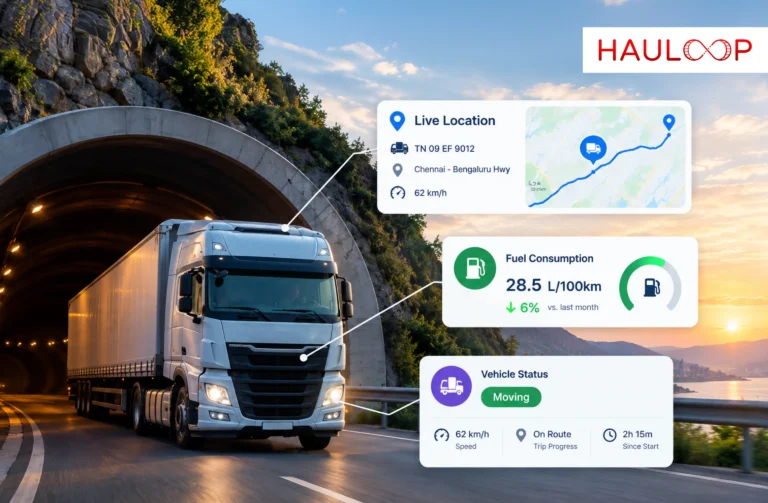
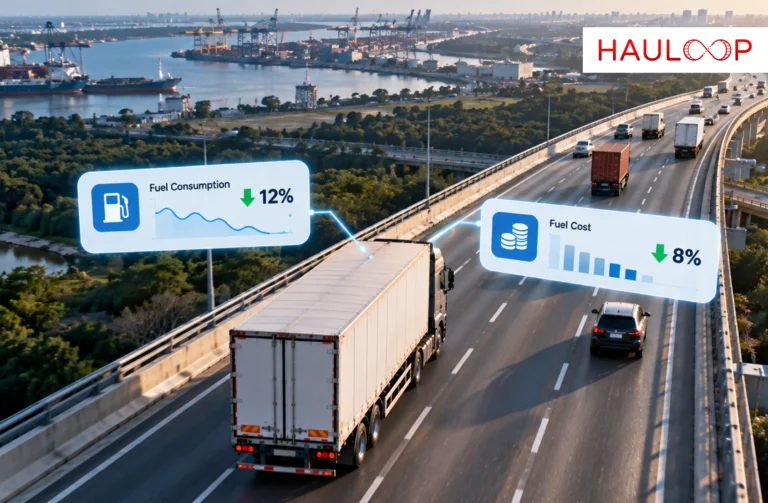
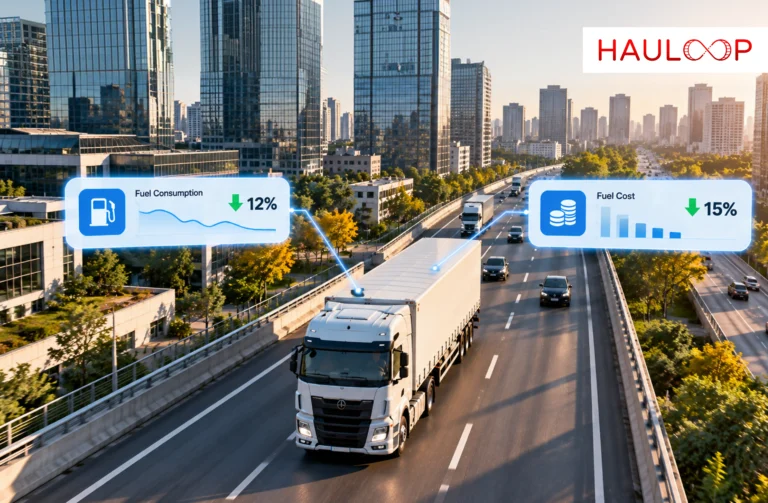
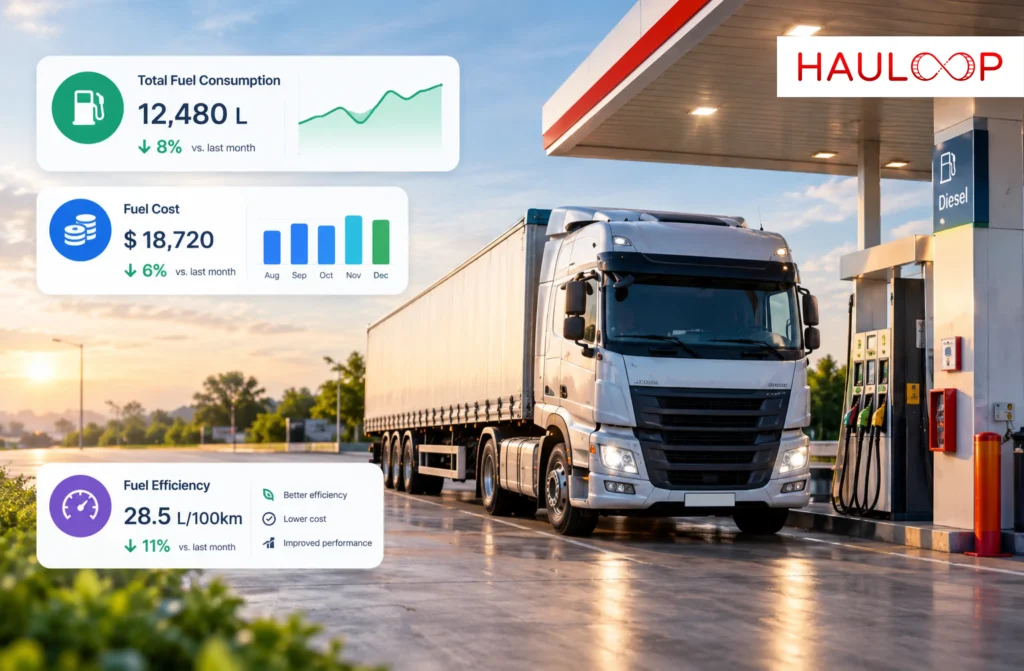
Fleet fuel analytics approaches the problem differently. It breaks fuel consumption down across vehicles, trips, operating patterns, and time periods so operators can identify where unusual usage is occurring and investigate what is driving it.
Why is Fuel Waste Difficult to See from Total Spend?
Fuel spend is an outcome.
It tells you what the fleet paid after the fuel has already been consumed.
Two months could have nearly identical fuel bills while hiding very different operating performance. One month may involve higher workload with efficient fuel use. Another may involve lower activity but excessive idling and inefficient trips.
This is why looking only at total cost can be misleading.
Fleet operators need to connect fuel consumption with what vehicles were actually doing.
That starts with collecting fuel information across vehicles, trips, and operations rather than treating fuel as one fleet-wide number.
How can Vehicle-Level Data Expose Unusual Fuel Usage?
Not every vehicle contributes equally to higher consumption.
Suppose a 40-vehicle fleet records an overall increase in fuel use.
Without vehicle-level analysis, the operator may assume the entire fleet has become less efficient.
But the data may reveal that most vehicles remain within their normal range while four vehicles have experienced significant increases.
Now the investigation becomes much more focused.
Operators can compare those vehicles with their previous performance or with similar vehicles undertaking comparable work.
The important point is that unusual consumption becomes visible at the level where action can actually be taken.
How does Idle Time Reveal Hidden Fuel Waste?
Idling is one of the clearest examples of fuel being consumed without adding distance to the trip.
Not every idle event represents waste. Traffic, loading operations, and other working conditions may require a vehicle to remain stationary with the engine running.
Repeated excessive idling is different.
If one vehicle spends significantly more time idling than comparable vehicles, operators can investigate where and when it happens.
Perhaps the vehicle regularly waits with the engine running at a particular depot. Maybe excessive idle time occurs between deliveries. Or the behaviour may be concentrated around certain drivers or routes.
Idle time monitoring gives fleet teams the evidence needed to investigate rather than assuming where fuel is being lost.
Can Driver Behaviour Explain Higher Fuel Consumption?
Sometimes the vehicle is not the main difference.
The way it is operated can affect consumption.
Aggressive acceleration, harsh driving, unnecessary idling, and other inefficient driving patterns can contribute to higher fuel usage.
Fuel analytics becomes more useful when these behaviours can be considered alongside consumption.
For example, if a vehicle’s fuel usage increases during periods when aggressive driving events also rise, the fleet has a possible relationship to investigate.
This does not mean every fuel increase should be attributed to the driver.
The value comes from combining driver behaviour and fuel data rather than examining either one without context.
How can Trip Analysis Find Inefficient Routes?
Fuel consumption can also vary according to where and how vehicles operate.
A shorter route is not automatically more fuel-efficient.
Heavy congestion, repeated stopping, long waiting periods, poor route selection, or operating conditions can cause a vehicle to consume more fuel even when the mileage appears reasonable.
Trip-based fuel analysis helps fleets compare consumption across actual journeys.
If one route repeatedly consumes more fuel than similar alternatives, operators can investigate why.
The route itself may need adjustment, or the issue may be connected with scheduling, congestion, idling, or another recurring operating condition.
This shifts fuel optimisation from broad cost-cutting to a specific operational problem.
Why should Fleets Look for Fuel Patterns Over Time?
An unexpected increase during one trip may have a legitimate explanation.
Repeated increases are more significant.
Fuel trends allow operators to compare consumption over days, weeks, or other operating periods.
If a vehicle gradually becomes less efficient, that trend can be investigated. If fuel usage repeatedly rises on a particular route, the fleet can review that operation. If excessive idling occurs during the same type of job, there may be a workflow issue.
This is why patterns matter.
They help fleets separate temporary exceptions from inefficiencies that repeatedly add to operating costs.
How does Performance Comparison Help Find Savings Opportunities?
Fuel performance becomes easier to understand when there is something meaningful to compare it with.
Operators can compare similar vehicles, different routes, individual trips, or performance across different periods.
Suppose two comparable trucks regularly complete similar work, but one consistently uses more fuel.
That does not immediately explain the cause.
But it tells the operator exactly where to look.
The next step may be to review idle time, trip conditions, driving behaviour, route differences, or vehicle performance.
Performance comparison therefore works as a way of narrowing the investigation rather than simply labelling one vehicle inefficient.
How does Fuel Data Become a Cost-Saving Decision?
Fuel analytics should ultimately lead to a practical action.
Hauloop’s Fuel Analytics process follows a useful progression:
Collect fuel data → Track consumption patterns → Identify inefficiencies → Analyse trends → Highlight cost drivers → Optimise operations.
That sequence matters.
A fleet cannot meaningfully reduce fuel waste simply because a dashboard says consumption is high. It needs to understand where the increase occurred and what operational factor may be responsible.
Once the cause becomes clearer, the response can be more specific.
The fleet may address excessive idling, review driver behaviour, change a route, investigate a vehicle, or compare operating practices across the fleet.
That is where fuel analytics moves beyond reporting.
Conclusion
Fuel waste is difficult to control when the only information available is how much fuel the fleet purchased.
The more useful questions are where that fuel was consumed, which vehicles or trips used more than expected, whether idling contributed, how driving behaviour affected consumption, and whether the same inefficiency keeps appearing.
Fleet fuel analytics connects those pieces so operators can move from seeing a higher fuel bill to identifying the operational reason behind it.
And once the cause is visible, the fleet has something specific to improve.
If your primary challenge is identifying where fuel is being wasted and what is driving higher consumption, an AI Fleet Management Platform can connect fuel, vehicle, trip, and operating data in one place. Book a demo with Hauloop to see how fuel analytics can help turn consumption data into practical cost-saving decisions.
Frequently Asked Questions
How does fleet fuel analytics detect fuel waste?
It analyses fuel consumption across vehicles, trips, routes, idle time, and operating patterns to identify unusual usage and recurring inefficiencies.
Is all vehicle idling considered fuel waste?
No. Some idling is operationally necessary. Monitoring helps fleets distinguish normal idle periods from repeated or excessive idling that may be increasing consumption unnecessarily.
Can fuel analytics identify inefficient vehicles?
It can highlight vehicles with unusual or changing fuel-consumption patterns, allowing operators to investigate the operational or vehicle-related reasons behind the difference.
Can driving behaviour increase fleet fuel costs?
Yes. Driving patterns such as aggressive acceleration, harsh driving, and unnecessary idling can contribute to higher consumption.
How can route performance affect fuel consumption?
Congestion, unnecessary distance, repeated stopping, waiting time, and other route conditions can influence the amount of fuel required to complete a trip.
What should fleets do after identifying fuel inefficiency?
The appropriate response depends on the cause. It could involve reducing excessive idling, reviewing driver behaviour, changing routes, investigating vehicle performance, or adjusting operating practices.