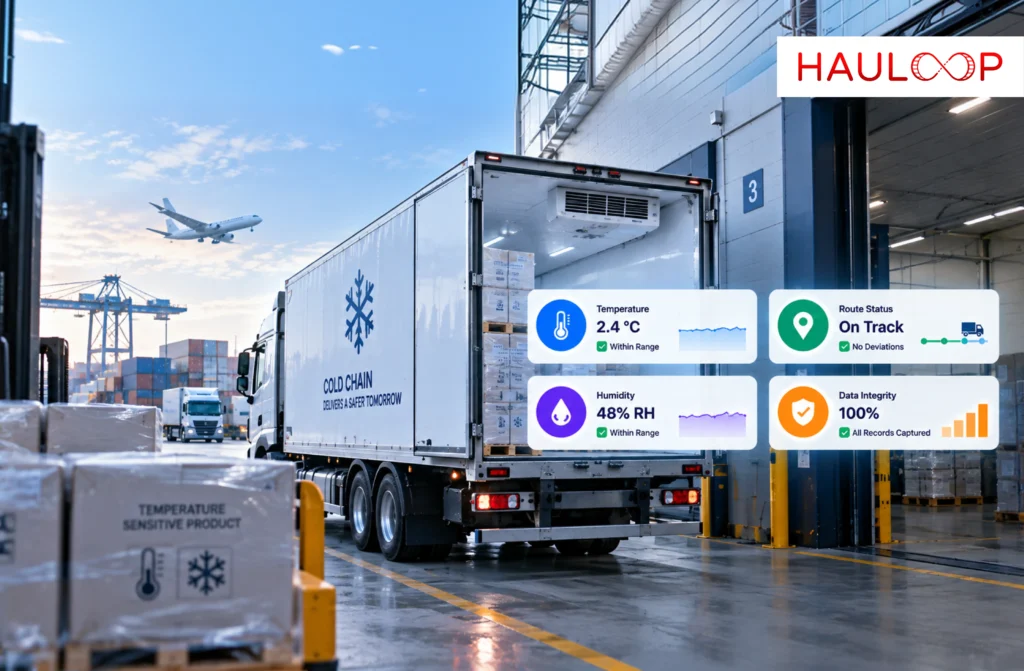
A reefer carrying frozen stock leaves the plant at -18°C. Nine hours later, it arrives at the distribution centre at -18°C.
The pickup and delivery readings match. But they leave one important question unanswered: what happened during the nine hours in between?
The temperature could have risen after a compressor fault and returned to -18°C before arrival. A door could have remained open during an unplanned stop. If no readings were captured during the journey, neither the fleet nor the customer can prove that the cargo stayed within its required range.
This gap matters across the cold chain. The Food and Agriculture Organization of the United Nations estimates that 526 million tonnes of food, around 12% of the global total, are lost or wasted because of insufficient refrigeration. The figure covers storage and distribution as well as transport, but it shows the scale of the problem when refrigeration is not maintained and verified.
This monitoring gap still affects many reefer operations, particularly when fleets depend only on separate temperature checks at pickup and delivery. Cold chain monitoring closes that gap by recording conditions throughout the trip, alerting the team when readings move outside the required range and preserving the complete temperature history after delivery.
Let’s examine how continuous monitoring addresses these gaps and gives fleets clear evidence of cargo conditions from pickup to final handover.
What is a Cold Chain Monitoring System?
A cold chain monitoring system tracks the conditions surrounding temperature-sensitive cargo throughout its journey. It collects readings from compatible temperature sensors or the reefer unit and connects them with the relevant vehicle, shipment and trip.
Depending on the cargo and equipment, the system may monitor:
- Temperature at defined intervals
- Minimum and maximum recorded temperatures
- Humidity inside the cargo area
- Cargo-door opening and closing activity
- The time and location of each reading
- Temperature breaches and their duration
- Alerts and actions recorded by the operations team
When a reading moves outside the required range, the system can alert the responsible team while the cargo is still in transit. After the trip, it preserves the readings and exceptions as a complete temperature history.
The monitoring system does not control the reefer or guarantee that the cargo will remain within range. Its role is to identify changes early and provide evidence of what happened between pickup and delivery. This helps fleets protect temperature-sensitive cargo, investigate excursions and produce reliable records for customers, quality teams and auditors.
Why Two Temperature Readings Leave the Whole Journey Unproven?
A manual check at pickup confirms the temperature at departure. Another check at delivery confirms the temperature on arrival. Neither reading covers the road between them.
This creates a blind spot. A reefer may run warm for 45 minutes, recover and still display the correct temperature at the destination. The arrival check looks normal even though the cargo experienced an excursion.
The same problem applies when the cargo door is opened away from an approved stop or when the refrigeration unit loses power temporarily. Unless readings are captured throughout the journey, the fleet may discover the issue only when the customer reports damaged stock.
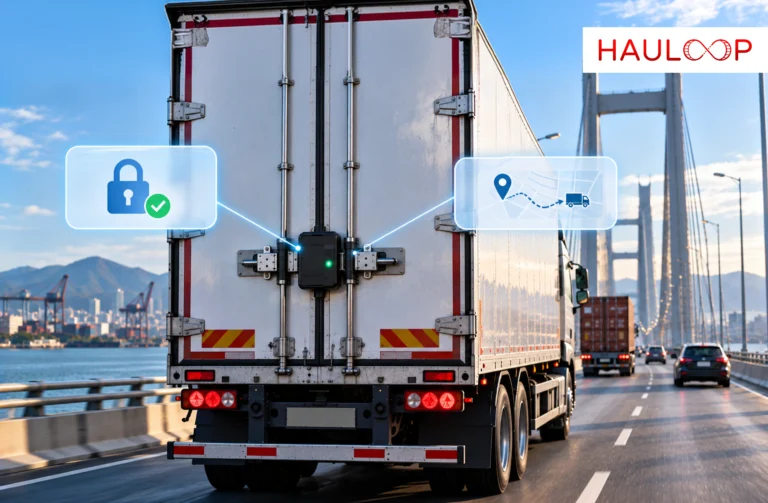
Hauloop’s IoT sensor integration connects compatible temperature, humidity and door data with the active vehicle and trip. Instead of keeping isolated readings, the fleet receives a history of how conditions changed from dispatch to delivery.
Set the Correct Temperature Range Before Dispatch
Monitoring starts before the vehicle leaves. The required temperature range must be linked to the correct load because frozen food, chilled dairy, fresh produce and pharmaceutical goods do not share one universal limit.
The trip setup should confirm:
- The permitted minimum and maximum temperature
- How often the sensor sends a reading
- Whether humidity and door activity also need to be recorded
- Who receives an alert when the limit is crossed
- What action the driver and dispatch team should take
The team should also confirm that the sensor is reporting and attached to the correct vehicle and trip. A working reefer does not create usable evidence if its data is missing, delayed or associated with the wrong shipment.
Getting these details right before dispatch prevents the team from trying to reconstruct the monitoring rules after a customer raises a complaint.
Receive the Alert While the Cargo can still be Protected
A temperature report generated after delivery may explain why stock was rejected. An alert raised during the journey gives the team a chance to prevent that rejection.
When a reading moves outside the configured range, the responsible person should be notified while the vehicle is still moving. Dispatch can contact the driver, check whether a door is open, review the reefer status or arrange technical support. If the problem cannot be corrected, the team can inform the receiving site or redirect the load where appropriate.
This is where monitoring becomes useful in daily operations. Nobody has to watch every vehicle and sensor continuously. The exception is brought to the team when attention is needed.
As explained in our guide to active trip tracking, live information is most valuable when it gives the fleet enough time to act.
Alerts depend on the sensor’s reporting interval, power and network connection. If coverage is interrupted, compatible equipment may store readings and upload them later. The trip record should show that delay clearly rather than presenting a later upload as a live alert.
Connect the Reefer Sensors Already Fitted to Your Vehicles
Many cold-chain fleets already have reefer units and sensors supplied by their preferred vendor. They should not have to replace suitable equipment simply to bring temperature data into the same operational view as the trip.
Where the existing device provides compatible data access, Hauloop can use those readings instead of requiring another sensor. The vehicle, trip and shipment can then be connected with the temperature history produced by the hardware already in service.
Compatibility still needs to be checked. The available data feed, calibration, reporting interval and network connection determine what information can be received and how quickly it becomes available.
The aim is practical: use reliable data from the equipment already fitted wherever integration is possible, and keep that data connected to the work the vehicle is completing.
Use Door, Stop and Route Data to Explain a Temperature Change
A temperature rise shows that conditions changed. It does not explain why they changed.
The cause could be a refrigeration fault, an open door, a long loading delay, an incorrect set point or the normal movement of air during an approved delivery. Looking at the reading alone can lead to the wrong conclusion.
Live fleet tracking adds the vehicle’s location, route progress and stops to the same timeline. Door activity can show whether the cargo area was open. Together, these records help the team understand what was happening when the temperature moved.
For example, a short rise inside the customer’s delivery zone may match an authorised unloading event. The same rise during an unexplained roadside stop needs a different response.
This evidence also keeps the review fair. The fleet can investigate the event instead of immediately blaming the driver or assuming that the reefer failed.
Generate a Complete Temperature Record After Every Trip
When the trip ends, the fleet should not have to collect screenshots, paper checks and driver messages to explain what happened.
The completed report should identify the vehicle, shipment and trip; show the required temperature range; and provide the readings captured from departure to delivery. It should also record any breach, how long it lasted, where it occurred, which alert was raised and what action followed.
Hauloop’s automated reports can bring this trip and condition data into a retrievable record. Any missing or delayed readings should remain visible so that the user can distinguish a continuous history from a gap in reporting.
The final handover should be connected as well. Our guide to proof of delivery explains how the recipient, time, location and delivery exceptions strengthen the record. For temperature-sensitive cargo, the journey history proves the condition leading up to that handover.
Use the Full-Trip Record for Customer and Compliance Reviews
The same report can answer different questions depending on the cargo.
A food distributor may need to confirm that frozen or chilled stock remained within the customer’s agreed range. A dairy fleet may need to examine a recurring problem on one route. A pharmaceutical operator may have stricter requirements for sensor calibration, sampling intervals, record retention and deviation handling.
The monitoring software preserves the evidence, but it does not guarantee compliance by itself. The fleet must configure the limits, devices and operating procedures according to the product, contract and regulations that apply.
What matters during a review is the ability to retrieve the complete record quickly. Our article on compliance audit records explains why evidence often fails when it is incomplete or scattered across different systems.
For a cold-chain trip, the record should answer three direct questions: Did the shipment remain within range? If not, when and where did the excursion happen? What did the team do about it?
Conclusion: Prove the Shipment Stayed Within Range from Pickup to Delivery
The reefer in the opening example left at -18°C and arrived at -18°C. Those two readings showed the temperature at either end, but they could not prove what happened during the nine-hour trip.
Cold chain monitoring provides that missing proof. It records conditions throughout the journey, raises an alert while the team can still respond and connects each exception with the vehicle’s location, door activity and trip status.
If the shipment stayed within range, the completed report confirms it. If the temperature crossed the limit, the same report shows when the excursion started, how long it lasted, where it happened and what action followed.
That is the difference between assuming the cargo stayed cold and being able to prove it. AI-powered fleet management software can connect compatible sensor data with the vehicle, route, shipment and completed trip. Book a Demo to see how your team can monitor temperature during the journey and retrieve the full record after delivery.
Frequently Asked Questions
What is cold chain monitoring?
Cold chain monitoring records the temperature and other relevant conditions around sensitive cargo during storage and transport. For a fleet trip, it connects sensor readings with the vehicle, route, time and shipment.
Why are pickup and delivery temperature readings not enough?
They confirm the temperature only at departure and arrival. They cannot show whether the cargo moved outside its required range and recovered during the journey.
Can existing reefer sensors be connected to Hauloop?
Compatible sensors can be connected when the existing vendor provides accessible data. Integration depends on the device, data feed, calibration, reporting interval and connectivity.
What happens when the temperature crosses the set limit?
An alert can be sent to the responsible team, subject to sensor reporting and connectivity. Dispatch can then check the reefer, door status, vehicle location and trip progress before deciding what action is required.
What should a full-trip temperature report include?
It should include the shipment, vehicle, required range, readings, timestamps, locations, excursions, duration, alerts and actions taken. Door activity, humidity and delivery acknowledgement can also be included when relevant.
Can a cold-chain report support a customer or regulatory audit?
Yes. A complete, retrievable trip record can support a customer investigation or audit. Whether it satisfies a specific requirement depends on the product, contract, jurisdiction, sensor calibration and required record-retention process.