The day’s trips are complete. Fuel-card transactions have been approved, and no major tank-level alert has appeared.
Yet the cost of completing each job continues to rise.
The reason may not be one obvious fuel event. A vehicle may be waiting longer at customer sites, travelling more empty kilometres or gradually consuming more fuel. The route may have changed, or the order rate may no longer cover the actual cost of the trip.
These issues are difficult to identify when fuel purchases, tank readings, routes and trip costs are reviewed separately.
The U.S. Department of Energy reports that more than one million long-haul trucks consume over one billion gallons of fuel annually while idling during required rest stops. Not all idling is avoidable, but the figure shows why fleets must understand where fuel is being used and whether it supports necessary work.
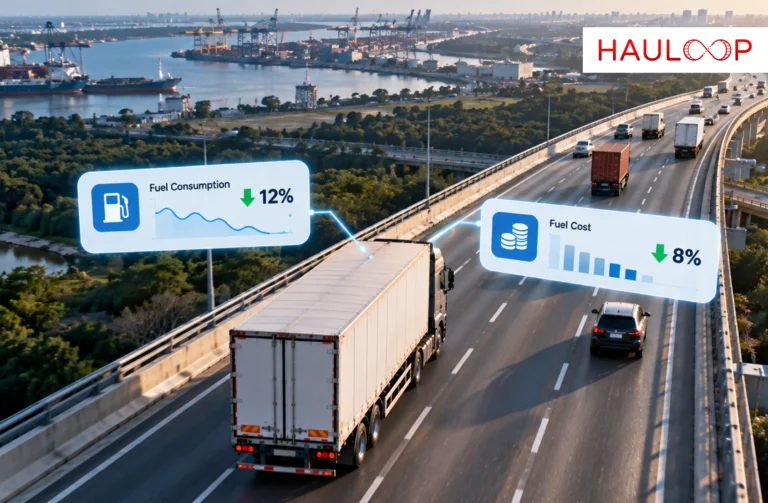
Fuel intelligence connects fuel activity with the vehicle, driver, route, trip and order. It helps the business understand why costs changed, where fuel may be wasted and whether the completed work produced the expected result.
Let’s examine how fuel intelligence turns separate fuel records into clearer cost, efficiency and profitability decisions.
What Fuel Intelligence Adds Beyond Fuel Records?
Fuel intelligence is the process of turning fuel and fleet data into an operational or commercial decision.
A fuel-card transaction confirms that fuel was purchased. A tank sensor records changes in the vehicle’s fuel level. Telematics shows distance, movement, idling and engine activity. Trip and order records explain the work assigned and completed.
Fuel intelligence examines the relationship between these records.
It helps the fleet answer practical questions:
- Did the purchase match the assigned vehicle and trip?
- Was the consumption reasonable for the work completed?
- Which event caused the difference?
- Is the result isolated or recurring?
- Does the next trip require a different route, vehicle, rate or instruction?
Reliable answers still depend on reliable inputs. Sensor calibration, device installation, consistent vehicle identities and accurate timestamps all affect the result.
The hardware may also differ by vendor and vehicle type. The objective is not to make every fleet use identical devices. It is to organise the available information consistently enough to compare it.
Our guide to fuel data explains the individual records behind fuel monitoring. Fuel intelligence begins when those records are assessed together.
Compare Expected and Actual Fuel Performance at the Right Level
A fuel result becomes meaningful when the fleet has a reasonable expectation for comparison.
That expectation should reflect the work being completed. Vehicle type, load, traffic, terrain, distance, engine hours and auxiliary-equipment use can all influence consumption.
The fleet can then compare:
- Expected performance: The fuel normally required for comparable work.
- Actual performance: The fuel consumed during the completed trip.
- Variance: The difference between the expected and actual results.
Consider a 420-kilometre delivery that normally requires 100 litres when completed by the same vehicle type with a similar load.
The completed trip consumes 112 litres.
- Expected consumption: 100 litres
- Actual consumption: 112 litres
- Fuel variance: 12 litres above the expectation
- Percentage variance: 12%
- Additional cost: $18, if fuel costs $1.50 per litre
The calculation shows that the trip used more fuel than expected. It does not prove why.
Congestion, a heavier load, an approved diversion or longer customer waiting time may explain the additional 12 litres. If no operating condition justifies the difference—or if similar variances appear across several trips—the vehicle, route, driver activity and fuel records may require closer review.
A smaller repeated variance can be more important than one larger but explainable result. For example, an unexplained five-litre increase across 20 similar trips creates 100 litres of additional consumption.
The information should therefore be reviewed at the correct operational level:
- Per vehicle: Is one asset gradually becoming more expensive to operate?
- Per route: Are congestion, waiting or empty returns affecting a recurring movement?
- Per trip: Which event changed the result of one completed job?
- Per order: Did fuel and other direct costs leave the expected contribution?
Relevant fuel analytics should show both the variance and the operating context behind it, helping the fleet identify where investigation or action is required.
Separate Market Price Pressure from Controllable Fuel Waste
Fuel intelligence cannot control the market price of fuel. It can show whether a higher bill came from price movement, increased consumption or both.
If the price rises while litres consumed remain stable, the increase may be mainly market-driven. The business may need to review rates, customer agreements or fuel surcharges.
If consumption also rises, the operation requires a separate review.
Additional fuel may be connected with:
- Longer or altered routes
- More empty kilometres
- Extended waiting
- Increased stationary operation
- Different vehicle allocation
- Heavier or more demanding loads
- Developing mechanical inefficiency
- Unauthorised activity
The fleet must also separate productive consumption from avoidable waste.
Stationary engine use may be necessary for refrigeration, power take-off equipment, climate control or safe operation. The same duration after the work has finished may require a different explanation.
This is why every idle event should not be labelled as waste. The location, task, vehicle and equipment activity must be considered before action is taken.
Rising fuel prices do not create every fuel-control problem. They make existing inefficiencies more expensive.
Verify the Fuel Added, the Tank Change and the Trip
A fuel bill confirms how much was charged. It does not independently prove how much entered the assigned vehicle.
A complete refuelling review should connect the transaction with the tank and trip records.
The fleet should be able to check:
- Which card and driver completed the purchase
- Whether the vehicle was near the station
- How much fuel was purchased
- The tank level before and after refuelling
- Whether the quantity suited the available tank capacity
- Whether the vehicle was completing an authorised trip
- How the fuel was consumed afterwards
For example, a bill may show that 100 litres were purchased. The tank reading may show how much fuel was already present and whether the expected increase occurred after the transaction.
A mismatch does not automatically prove theft. Delayed readings, sensor calibration, card assignment, data transmission and vehicle design must be checked first.
Context-aware fuel alerts can help teams distinguish a credible loss from a sensor issue or an explainable fuel event.
Fuel cards and tank monitoring therefore serve different purposes. The card records the purchase. The sensor helps show what happened inside the tank. Fuel intelligence connects both with the trip before the fleet decides whether an investigation is necessary.
Improve Efficiency Without Replacing the Vehicle
A fleet does not always need new vehicles to improve fuel performance. Many savings opportunities begin with better use of existing assets.
Fuel intelligence can identify where the operating plan is creating unnecessary consumption.
One route may repeatedly involve extended waiting. Another may send vehicles back empty. A poorly sequenced delivery plan may create additional distance, while the wrong vehicle allocation may increase fuel use for the same work.
Effective route planning should consider more than the shortest distance. Delivery windows, traffic, stop order, load, terrain, vehicle capacity and return work can all affect the practical fuel requirement.
Driver behaviour also matters, but it must be assessed in context. Repeated speeding, harsh acceleration or unnecessary engine use may support targeted coaching. One unusual trip should not be used to blame the driver without considering traffic, load, route and vehicle condition.
Fuel performance may also signal an asset issue. Gradually rising consumption alongside tyre, fault-code or maintenance information can indicate that the vehicle needs inspection.
These findings create several possible actions without replacing the truck:
- Adjust the route or stop order
- Reduce unnecessary empty running
- Change the vehicle assigned to the work
- Address customer waiting time
- Coach a repeated driving pattern
- Inspect developing vehicle inefficiency
The purpose is not simply to use fewer litres. It is to complete the required work with less avoidable fuel consumption.
Measure Trip Profitability as Soon as the Trip Ends
A monthly fuel total shows what the fleet spent. It may not show which trip or order reduced the margin.
Trip-level fuel intelligence connects the completed movement with its commercial purpose.
The record can bring together:
- The order and customer
- Trip revenue
- Vehicle and driver
- Planned and actual route
- Distance and stops
- Fuel consumed
- Waiting and empty running
- Other available direct trip costs
This gives the business three important cost views: per vehicle, per route and per trip.
The fleet can see whether one asset is expensive to operate, whether a recurring route is weakening margins or whether an individual order was priced correctly.
Our guide to trip profitability explains this calculation in greater detail.
The main advantage is timing.
When the report is available after the trip, the team does not need to wait until month-end to discover that the same low-margin movement has been repeated.
The next order can be repriced. A different vehicle can be assigned. The route can be changed, or avoidable waiting can be discussed with the customer.
Month-end reporting remains important for finance and budgeting. End-of-trip reporting helps operations protect the next movement.
Turn Repeated Fuel Variances into a Clear Next Action
Some fuel problems do not appear as one major alert.
A vehicle may move slightly outside its expected range across several weeks. Waiting time may gradually increase at one site. The same refuelling mismatch may occur repeatedly at one station.
One event may not justify action. A repeated pattern may.
Fuel intelligence can highlight where the pattern is becoming operationally or commercially important. It may indicate that:
- A vehicle requires inspection
- A route should be reviewed
- A customer appointment process is increasing waiting time
- A refuelling location needs closer checking
- A driver could benefit from targeted coaching
- An order rate no longer reflects the work required
These insights should support prioritisation rather than promise a guaranteed outcome. A developing pattern can show where attention is needed, but the business must still review the evidence before reaching a conclusion.
Every insight should also have an owner.
Dispatch may change the route or vehicle assignment. Finance may check the transaction. Maintenance may inspect the asset. Operations may review the customer process, while management may reconsider the rate or contract.
The reporting cycle should match the decision:
- After each trip: Correct the next route, allocation, instruction or rate.
- Each week: Identify recurring vehicle, driver, route, customer or station patterns.
- Each month: Review budgeting, suppliers, asset strategy and longer-term cost changes.
Automated reports can help deliver the appropriate information to the responsible team.
Without ownership and a defined next step, fuel intelligence becomes another report waiting to be read.
Conclusion: Know Why Fuel Cost Changed Before it Repeats
Return to the fleet from the beginning.
The fuel-card transactions were approved, the trips were completed and no major tank-level alert appeared. Yet the cost of completing each job continued to increase.
Fuel intelligence explains what those separate records cannot.
It compares expected and actual performance, connects fuel with the vehicle, route, trip and order, and shows whether the difference came from market price, avoidable consumption, vehicle condition, refuelling activity or a commercial rate.
The fleet can then act while the information is still useful.
A route can be corrected, a vehicle inspected, a transaction verified, a driver coached or an order repriced before the same cost appears again.
That is what makes fuel intelligence different from fuel reporting. It does not stop at showing how much fuel was purchased or consumed. It helps the right team understand why the cost changed and decide what to do next.
AI-powered fleet management software can bring fuel, vehicle, route, trip and cost information into one operational view. Book a Demo to see how connected fuel intelligence can support earlier fleet decisions.
Frequently Asked Questions
What is fuel intelligence?
Fuel intelligence connects fuel purchases, tank readings, vehicle activity, routes, trips and costs. It helps fleets understand why consumption changed, where the difference occurred and what operational or commercial action should follow.
How is fuel intelligence different from fuel management?
Fuel management records purchases, consumption and related controls. Fuel intelligence interprets those records with vehicle, route, trip and cost information to explain variances and guide the next decision.
Can fuel intelligence show cost by vehicle, route and trip?
Yes. When the relevant records are connected, fuel performance can be reviewed by vehicle, route, trip or order. Each view helps identify where cost or efficiency is changing.
Can a fuel transaction prove how much entered the tank?
A transaction shows how much fuel was purchased. Tank readings and vehicle data provide additional evidence about how much entered the tank and what happened afterwards.
Does fuel intelligence automatically prove fuel theft?
No. It can identify an event that requires investigation. Sensor reliability, tank readings, location, vehicle movement, transaction data and other available evidence should be reviewed before reaching a conclusion.
Why should fuel performance be reviewed after every trip?
An end-of-trip review allows the fleet to correct the next route, vehicle assignment, operating instruction or rate. Waiting until month-end may allow the same cost problem to be repeated.