A vehicle completes a delivery. The order value looks healthy and the trip is marked complete.
But did that trip actually make money?
The answer may remain unclear until the monthly fuel bill and operating costs are brought together. By then, the route may have been repeated several times under the same conditions.
Fuel is too significant a cost to review only after the month has closed. The American Transportation Research Institute reported that fuel averaged $0.482 of the $2.336 required to operate a truck per mile in 2025. That means fuel represented more than one-fifth of the reported operating cost.
A monthly total shows what your fleet spent. It does not immediately show which order earned a margin, which route absorbed it or which vehicle changed the result.
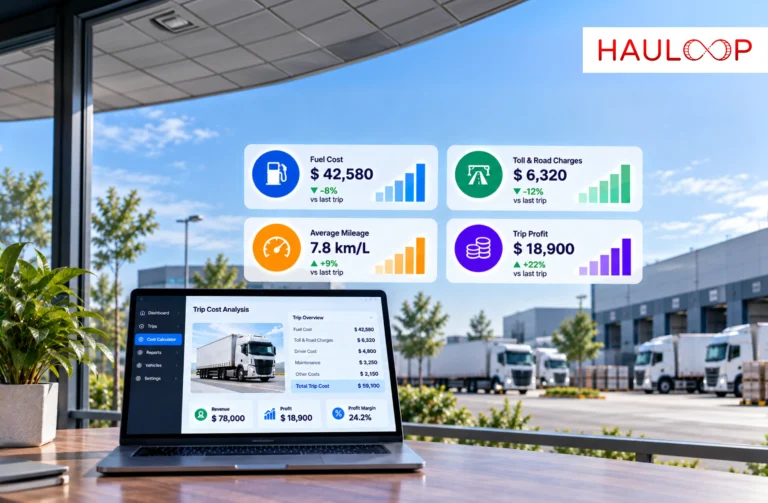
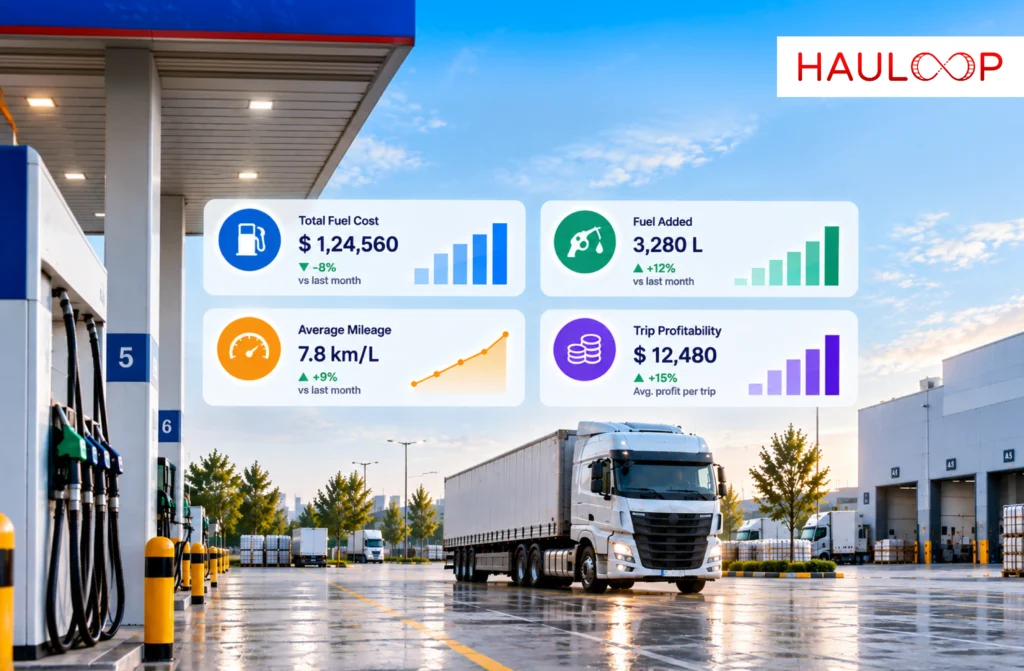
Fuel intelligence closes that gap by connecting consumption with the business activity behind it. Hauloop can provide the relevant report after trip completion, without waiting until month-end. The important question is no longer simply how much fuel you used, but whether that fuel produced a profitable trip.
Your Fuel Data Should Explain More Than Litres Consumed
Fuel intelligence turns fuel readings and transaction data into an explanation of how fuel affected your operation.
A tank-level reading or fuel-card entry provides only one part of the picture. To support a commercial decision, that information must be connected with the vehicle, driver, route, trip and order.
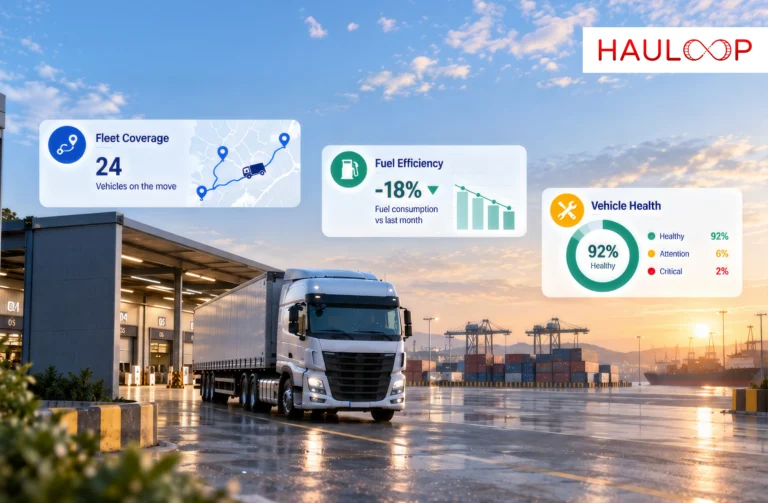
This is what separates fuel intelligence from a basic consumption report. A fuel management system should help you understand where fuel was used, why consumption changed and how that change affected the work completed.
Litres alone do not explain performance. Two vehicles may consume the same amount, but one may carry a larger load or complete more revenue-generating work. Low consumption does not make a trip profitable if the order was underpriced or the vehicle spent hours waiting.
Our guide to fuel data explains what sits behind a consumption figure. Trip profitability takes the next step by connecting fuel use with revenue and cost.
Month-End Totals can Hide the Trips Reducing Your Profit
A fleet-wide monthly total combines different vehicles, routes, customers and operating conditions into one figure.
Your finance team may see that fuel spending increased without knowing whether the cause was a new route, a heavier load, a poorly performing vehicle, excessive idling or several low-margin orders.
A profitable month can still contain repeated trips that lost money, hidden by stronger routes or higher-margin customers.
Trip-level analysis separates those results. It allows your business to ask:
- Which order generated the revenue?
- Which vehicle and driver completed it?
- Which route was followed?
- How much fuel did the trip consume?
- What other direct operating costs applied?
- What margin remained after those costs?
Without this connection, you can see the expense but not the decision or activity that created it.
Reliable Fuel Data is the Foundation of Accurate Profitability
Fuel intelligence depends on the quality of the information entering the system.
The device and installation approach may change according to the vendor, vehicle type and available data source. Your fleet may use tank sensors, vehicle data or a combination of device readings and fuel-card transactions.
These sources are not interchangeable. Installation, calibration and update frequency affect how accurately fuel events are recorded. The setup must therefore suit your vehicles and operating environment.
Your vehicles do not need identical hardware, but the resulting data must be organised consistently. Reliable fuel analytics can then connect readings with trips instead of presenting disconnected values.
A delayed reading should not be treated as a live event, and an uncalibrated sensor should not determine profitability. Accurate commercial decisions begin with reliable fuel data.
How Fuel Intelligence Helps Your Business Reduce Fuel Costs?
A fuel bill may show that your business paid for 100 litres, but the bill alone cannot confirm that all 100 litres entered the vehicle’s tank.
Hauloop Fuel Intelligence can connect the refuelling transaction with tank-level data from a correctly installed and calibrated device. It can show how much fuel was already in the tank, how much was added and the total fuel level after refuelling.
For example, if the vehicle had 40 litres before refuelling and 100 litres were added, the expected total would be approximately 140 litres. When the recorded increase is significantly lower, your team can investigate the difference immediately instead of discovering the loss during month-end reconciliation.
The variance may result from an incorrect transaction, a fuel leak, a sensor issue or potential fuel misuse. It should be investigated using the available vehicle, location, transaction and sensor context before any conclusion is reached.
By identifying the difference soon after refuelling, your business can correct the cause before the same loss is repeated. This helps control avoidable fuel costs and protects the profitability of future trips.
Connect Every Completed Trip to its Order Revenue
Fuel cost becomes commercially meaningful when it is connected to the work that produced the revenue.
Your trip record should identify the order, customer, vehicle, driver, route, actual distance, completion time and revenue. Fuel consumed can then be assigned to the same record.
This answers a question that a fuel invoice cannot: what business did the fuel support?
Consider two orders completed over the same distance. One carries an appropriate rate and returns directly. The other is priced lower, includes extended waiting and returns empty. Their commercial results are different even if the distance appears similar.
Linking the order to the trip allows you to compare revenue with the direct cost of completing the work. Fuel is important, but tolls, driver costs and other trip expenses should also be included where data is available. Fuel consumption alone is not profit.
See Your Profitability by Vehicle, Route and Trip
One trip result becomes more valuable when you can compare it across your operation.
Per vehicle: This shows whether one asset repeatedly costs more to complete comparable work. Hauloop’s vehicle cost analysis places fuel alongside other asset expenses so you can judge the vehicle on its complete cost profile.
Per route: This reveals whether congestion, gradients, delays, diversions or empty running are reducing your expected margin. The shortest route may not always be the most economical.
Per trip: This connects order revenue with the cost of the movement, showing whether an individual job achieved its expected margin.
Together, these views help you determine whether the issue belongs to one movement, a recurring route or the way a particular vehicle is deployed.
Review the Report Before Dispatching the Next Vehicle
Timing is the strongest difference between operational intelligence and retrospective reporting.
If you wait until month-end, an unprofitable route may already have been repeated. A pricing problem may affect several more orders, and an inefficient vehicle may remain assigned to the same work.
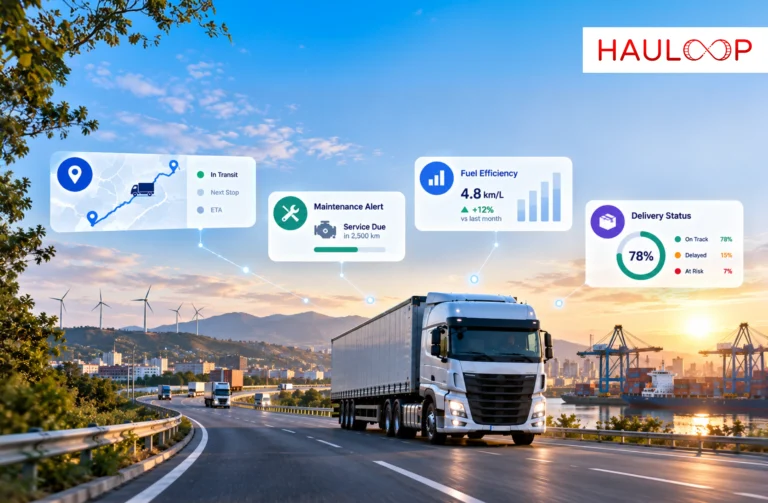
When the report is available after trip completion, your team can review the result while the events are still recent. Hauloop’s automated reports bring current trip, fuel and cost information into a repeatable reporting process.
The report should compare expected and actual performance, identify the main variance and show whether the next movement needs a different rate, route, vehicle or instruction.
Month-end reporting still supports finance and long-term analysis. End-of-trip reporting helps your operations team prevent the same margin loss from being repeated.
Turn Fuel Variances into Better Decisions for Your Next Trip
A profitability report creates value only when it leads to a specific action.
If one driver regularly consumes more fuel on comparable work, your team should consider the load, traffic, terrain, waiting time and vehicle condition. Confirmed patterns such as excessive idling, harsh acceleration or speeding can support targeted driver coaching.
Our explanation of driver safety scores shows why behaviour needs context rather than one isolated event.
An unexplained fuel-level drop may reduce the expected margin, but it should not automatically be labelled as theft. Hauloop’s article on fuel theft detection explains how vehicle, location and sensor signals help separate credible losses from false alerts.
Other results may lead you to reprice an order, change the assigned vehicle, correct a route or discuss waiting time with a customer. The purpose of the report is not simply to identify a poor result. It is to improve the next decision.
Conclusion: Know What Each Trip Earned Before You Repeat It
Return to the completed delivery from the beginning. The order value looked healthy, but your business could not immediately tell whether the trip made money.
Fuel intelligence provides the missing connection. It links fuel use with the order, revenue, vehicle, route, driver and completed trip. Your fleet can then see where the margin was protected, where it was reduced and what should change before the next vehicle is dispatched.
The answer no longer needs to wait for the month-end fuel total. When the report is available after the trip, you can review the outcome while there is still time to improve the next pricing, routing or vehicle-allocation decision.
AI-powered fleet management software connects fuel, vehicle, route and trip-cost data so your business can move from delayed reporting to earlier action. Book a Demo to see how end-of-trip fuel visibility can help protect the profitability of every movement.
Frequently Asked Questions
What is fuel intelligence in fleet management?
Fuel intelligence connects fuel readings and transactions with vehicle, driver, route, trip and order data. It helps your fleet understand why fuel was consumed, which business activity used it and how that consumption affected operating cost and trip profitability.
How does fuel intelligence help reduce fuel costs?
Fuel intelligence can compare transaction details with tank-level changes and trip activity. This helps your team identify unexpected differences, excessive consumption and recurring inefficiencies earlier, so the cause can be investigated before the cost is repeated.
How is trip profitability calculated?
Trip profitability compares the revenue earned from an order with the direct costs of completing the movement. These may include fuel, driver costs, tolls and other applicable trip expenses. The accuracy of the result depends on the revenue and cost data available and how correctly each value is assigned.
Can your fleet review profitability immediately after every trip?
When the required trip, revenue, fuel and cost data are connected, the relevant report can be generated after trip completion. This gives your operations team an earlier view of performance instead of relying only on a consolidated month-end report.
Why does fuel-device installation affect reporting accuracy?
Different vendors and vehicle types may require different devices, data sources and installation methods. Correct selection, installation and calibration help ensure that readings are reliable enough to compare refuelling events, fuel consumption, trips and vehicles.Can fuel intelligence compare vehicles and routes?
Can fuel intelligence compare vehicles and routes?
Yes. Fuel and cost information can be reviewed per vehicle, route and trip. These comparisons help your team identify whether a profitability variance relates to one movement, a recurring route or the performance and deployment of a particular vehicle.