You don’t usually notice fleet problems the moment they begin. It starts with small things, a driver update that comes in late, a vehicle that should have gone for service but is still on the road, or a slight increase in fuel usage that no one can fully explain. Individually, these don’t feel like serious issues. But over time, they add up. What begins as minor inefficiencies slowly turns into delays, higher costs, and constant follow-ups across your team.
Consider a 15-vehicle delivery fleet. One vehicle is running 4 days past its scheduled service, another has shown a 12% spike in fuel consumption over the last week, and a third missed its delivery window with no update to the operations team. Without a connected system, each of these is discovered late, after the damage is done. With an AI fleet management platform, all three are flagged in real time, giving your team a chance to act before they become bigger problems.
What is a Fleet Management System?
A fleet management system is a centralized platform designed to help you manage all aspects of your fleet operations in one place. It brings together vehicles, drivers, trips, fuel usage, maintenance schedules, and performance data into a single, unified view. Instead of relying on multiple tools, spreadsheets, or constant communication between teams, everything becomes accessible within one system.
In practical terms, it allows you to track where your vehicles are, monitor how trips are progressing, understand how your drivers are performing, and keep control over maintenance and fuel usage. But more importantly, it helps you make decisions based on what’s happening right now, not what happened hours or days ago.
How does a Fleet Management System Work?
A fleet management system works by collecting data from multiple sources and turning it into a clear, actionable view of your operations. This data typically comes from GPS and telematics devices, fuel systems, driver inputs, and vehicle diagnostics. The system processes this information instantly and provides live updates on vehicle locations, trip progress, speed, stoppages, and estimated arrival times.
The real value lies in how this data is used. Instead of simply displaying information, the system identifies patterns and highlights what needs attention. It can alert you to delays, signal potential maintenance issues, and detect unusual fuel consumption. This allows your team to respond while operations are still ongoing, rather than dealing with the consequences later.
What can You Manage with it?
A fleet management system gives you control across every area of your daily operations:
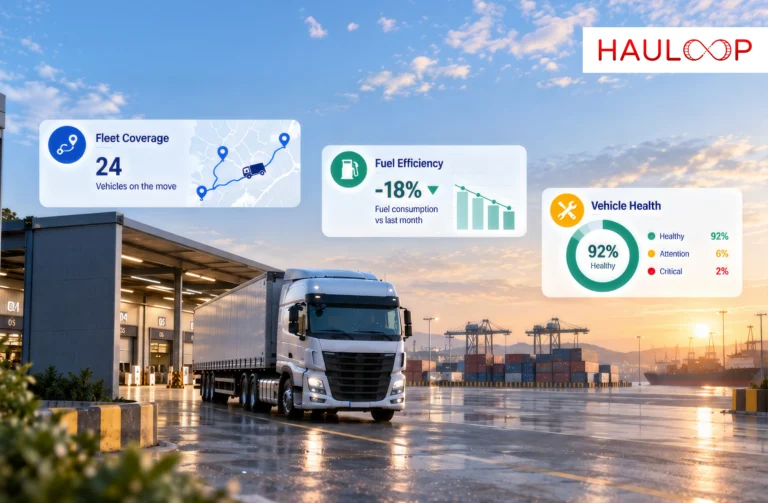
Vehicle & Trip Visibility — Know exactly where your fleet is and how each trip is progressing at any given moment, without chasing updates.
Maintenance Tracking — Monitor service schedules and vehicle health proactively, so breakdowns don’t catch you off guard mid-operation.
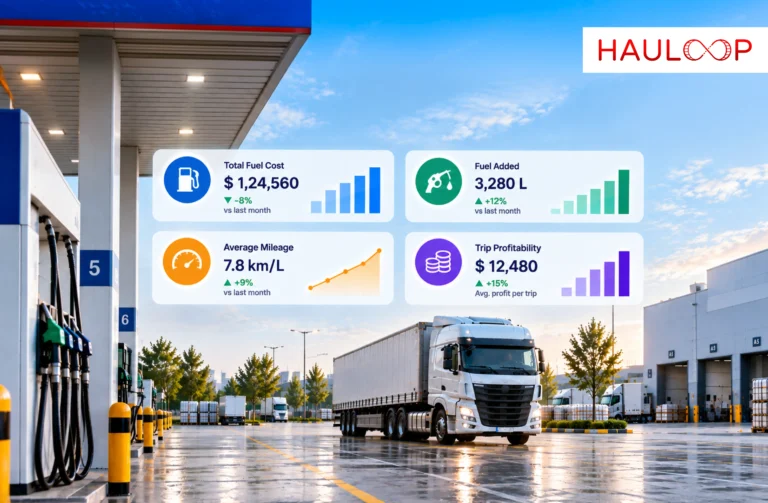
Fuel Management — Track consumption patterns across your fleet and catch inefficiencies early, directly reducing your cost per kilometre.
Driver Performance — Understand how your drivers are operating on the road, enabling safer behaviour and more consistent service.
Reporting & Analytics — Get instant operational insights without manual effort, so decisions are based on data, not guesswork.
When all of this is connected in one platform, your team stops switching between tools and starts running operations with full clarity.
What Problems does it Solve?
Most challenges in fleet operations stem from delayed information and disconnected workflows. When teams don’t have real-time visibility, they rely on assumptions or manual updates, which leads to slower decision-making. Fuel costs often rise because inefficiencies go unnoticed, and maintenance issues escalate because they are not identified early.
A fleet management system addresses these problems by bringing clarity and coordination into operations. It ensures that information flows in real time, allowing teams to act quickly and accurately. Instead of reacting to issues after they occur, businesses can identify risks early and prevent disruptions. This shift significantly reduces downtime, improves cost control, and enhances overall operational efficiency.
Conclusion
Fleet operations don’t become inefficient overnight. They gradually lose control when information is delayed, systems are disconnected, and decisions are made too late. This is exactly what a purpose-built system handles, so your team focuses on operations, not firefighting.
Book a demo with Hauloop, which brings everything into one place, giving your team the visibility and control to stay ahead of problems before they affect your operations.
Frequently Asked Questions
What is the difference between a fleet management system and GPS tracking?
GPS tracking shows where your vehicles are. A fleet management system goes further by combining tracking with fuel monitoring, maintenance management, driver performance, trip visibility, and operational reporting in one platform.
How can a fleet management system help reduce operating costs?
By identifying fuel inefficiencies, reducing unnecessary idling, improving route visibility, and helping prevent costly vehicle breakdowns through proactive maintenance tracking.
Can a fleet management system improve vehicle maintenance planning?
Yes. The system tracks service schedules, vehicle health, and maintenance history, helping fleets schedule repairs before minor issues become expensive breakdowns.
How quickly can a fleet management system be implemented?
Implementation timelines vary depending on fleet size and hardware requirements, but most fleets can be fully operational within 2–8 weeks with proper onboarding and setup.
Do small fleets benefit from a fleet management system?
Absolutely. Even fleets with 10–20 vehicles can benefit from improved visibility, reduced fuel waste, better maintenance control, and fewer manual follow-ups.
What should I look for when choosing a fleet management system?
Look for real-time visibility, maintenance management, fuel tracking, driver performance monitoring, reporting capabilities, ease of use, and the ability to scale as your fleet grows.