
A vehicle leaves the depot with a licensed driver, valid inspection records, current permits, and no unresolved defects. The operations team considers it compliant.
The route then enters another state, province, or country. At a roadside check, the same vehicle is assessed against a different set of operating rules. The driver may need another record format, the trip may create a new mileage-reporting obligation, or a document accepted in the home region may not satisfy the authority conducting the inspection.
In the 2026 International Roadcheck, inspectors completed 54,575 commercial vehicle and driver inspections across North America. Although most passed without an out-of-service violation, 19% of vehicles and 5.8% of drivers inspected were placed out of service, according to the CVSA inspection results.
The lesson is straightforward: compliance cannot be assumed from a vehicle’s status at its starting point. Hauloop’s compliance management brings driver, vehicle, inspection, permit, and operational records together. But what must a fleet control when every region applies its own requirements?
What does Fleet Compliance Actually Cover?
Fleet compliance is the process of keeping drivers, vehicles, journeys, and operating records aligned with the rules that apply to a fleet’s work.
It can include driver licences and qualifications, hours of service, vehicle inspections, maintenance records, permits, insurance, tax and mileage reports, load restrictions, and incident documentation. The exact obligations depend on the vehicle, cargo, route, business activity, and jurisdiction.
Being compliant therefore means more than possessing documents. The records must be valid, applicable to the current operation, available when requested, and supported by what actually happened on the road.
Crossing a Boundary can Change the Rulebook
A fleet may operate one vehicle across several regulatory environments during the same week. The asset has not changed, but the rules surrounding its use may have.
Driving limits, rest requirements, inspection formats, road-use taxes, emissions requirements, vehicle dimensions, and document-retention periods can differ between markets. Some rules apply nationally, while others are enforced at state, provincial, or local level.
That is why multi-region compliance starts with route context. The operation must know where the vehicle will travel, which authority governs each stage, and what the driver must carry or retrieve before departure.
Driver Readiness Must Match the Region
A valid driver licence is only one part of driver compliance. Fleets may also need medical certifications, training records, endorsements, duty-status logs, and evidence that working and rest limits were followed.
Electronic logs can connect driving time, duty status, and trip activity without relying on handwritten records. However, teams must still configure and review those records against the rules that apply to the route.
Compliance also depends on behavior. Speeding, repeated harsh events, or ignored rest requirements can create risk even when the driver file appears complete. Reviewing driver safety scores alongside formal records gives managers a clearer view of readiness.
Vehicle Readiness Goes Beyond a Valid Inspection
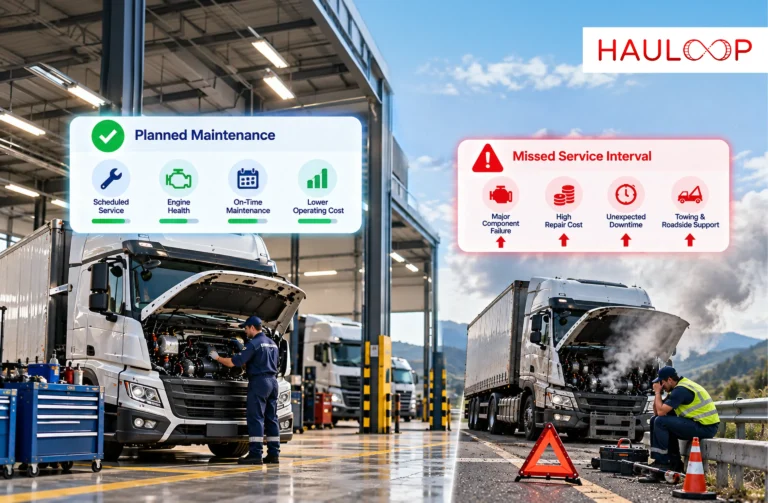
A current inspection certificate does not guarantee that a vehicle remains roadworthy throughout its operating period. A defect may develop after the inspection, or a driver may report a problem that is never closed out.
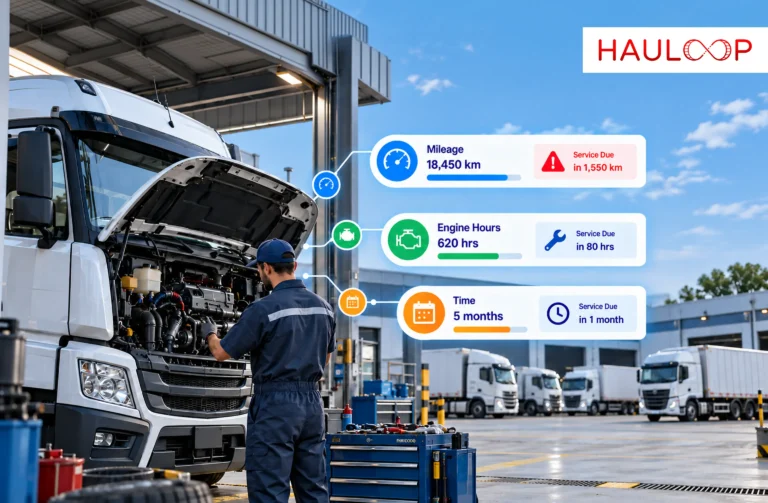
Fleets need a continuous record linking inspections, reported defects, maintenance actions, and return-to-service decisions. The required inspection type or frequency may also change with vehicle class, use, or jurisdiction.
This is where predictive maintenance can support compliance readiness. It helps teams act on developing vehicle issues before they affect roadworthiness or the next regional assignment.
Location and Mileage can Become Compliance Data
Where a vehicle travels can determine which rules, taxes, and reporting duties apply. Route and mileage data are therefore more than operational information.
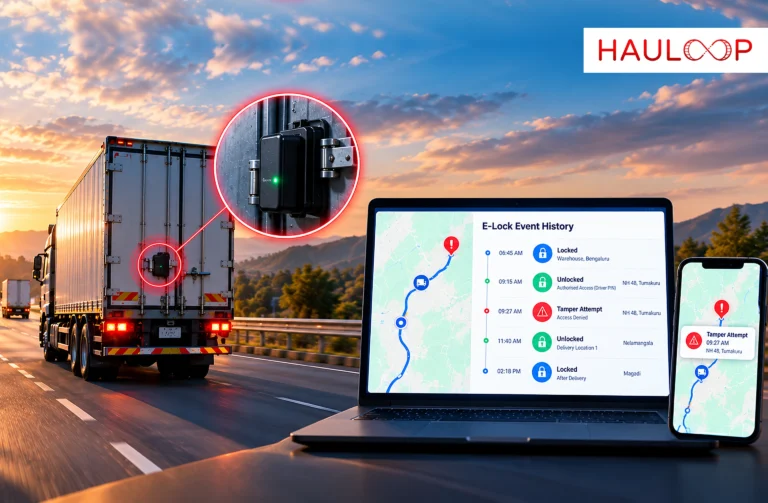
Real-time tracking can help establish when a vehicle entered or left a jurisdiction. When this is connected with trip, fuel, and driver records, the fleet can support mileage declarations and investigate inconsistencies.
For fleets operating under mileage-based tax rules, fuel tax reports can organize distance and fuel activity by jurisdiction. The principle also applies outside a specific reporting scheme: location data becomes more useful when it is tied to the obligation it creates.
One Compliance Status cannot Represent Every Market
A single green “compliant” label can be misleading if it does not explain where, when, and for which operation that status applies.
A stronger system evaluates compliance in context. It should connect each driver, vehicle, route, and document with the relevant jurisdiction and effective date. It should also warn the team when a permit is about to expire, an inspection will fall due during a trip, or a driver lacks a requirement for the assigned market.
This gives dispatch a practical answer before releasing the vehicle: compliant for this route, on this date, with this driver and cargo—not merely compliant somewhere in the fleet database.
Multi-Region Compliance Must be Proven Before Dispatch
Return to the vehicle stopped after entering another region. The problem was not necessarily that the fleet had no records. The records may have been valid only for the home market, stored in different systems, or unavailable to the driver when requested.
A region-aware process checks the route first, maps the applicable requirements, verifies the driver and vehicle, and confirms that the necessary evidence is accessible. If something is missing, the fleet can correct it before departure rather than discovering the gap during an inspection.
That is what fleet compliance means across multiple regions: not one permanent status, but verified readiness for the exact operation being performed.
Conclusion
A vehicle that is compliant at its depot is not automatically compliant everywhere it travels. Driver rules, inspections, permits, mileage reporting, and required records can change as the route crosses jurisdictions.
Hauloop is an AI Powered Fleet Management Software that helps connect compliance requirements with the drivers, vehicles, and trips to which they apply. Prepare every regional operation before the vehicle leaves Book a Demo.
Frequently Asked Questions
What is fleet compliance?
Fleet compliance means keeping drivers, vehicles, journeys, and records aligned with applicable transport and safety requirements. It can cover licences, working hours, inspections, maintenance, permits, insurance, mileage, and regulatory documentation.
Why does fleet compliance change between regions?
Transport rules may differ by country, state, province, or local authority. Driver hours, vehicle standards, permits, taxes, record formats, and retention requirements can therefore change when a vehicle enters another jurisdiction.
Can one compliance checklist cover every route?
A standard checklist can cover shared requirements, but it should be supplemented by route-specific controls. The fleet must account for the vehicle, driver, cargo, destination, transit regions, and date of operation.
How do electronic logs support regional compliance?
Electronic logs create a digital record of driving time and duty status. Fleets must still ensure that the settings, review process, and records satisfy the hours-of-service rules applying to the journey.
Why is vehicle location relevant to compliance?
Location can establish when a vehicle entered a jurisdiction and how far it travelled there. This may support mileage reporting, tax calculations, route restrictions, and the investigation of compliance events.
Who is responsible for multi-region fleet compliance?
Responsibility is usually shared across management, compliance teams, dispatchers, maintenance personnel, and drivers. The operator should define who verifies each requirement before dispatch and who responds when a gap appears.