The paper POD is lying to your client. Here is what a digi lock knows that paper never will.
The truck left your depot at 6:45 am with 840 cartons of packaged beverages for three hypermarket distribution centres in Pune.
The trip sheet was signed. The padlock was clicked shut. The driver had the key.
By 9:20 am, the truck had stopped for twenty-three minutes at a dhaba on the Nashik highway. By 11:40 am, it had reached the first DC. By 2:15 pm, the principal’s warehouse manager had signed the delivery receipt.
On Thursday, the principal raised a claim.
Forty-two cartons were short.
The signed delivery receipt did not account for them. The driver said he delivered everything. Your operations manager said the truck was left full. The principal said it arrived short.
Nobody had the answer.
Because nobody had the data.
That is the problem a digi lock solves, and it solves it in a way that a padlock, a trip sheet, a driver signature, and a phone call to the warehouse manager cannot.
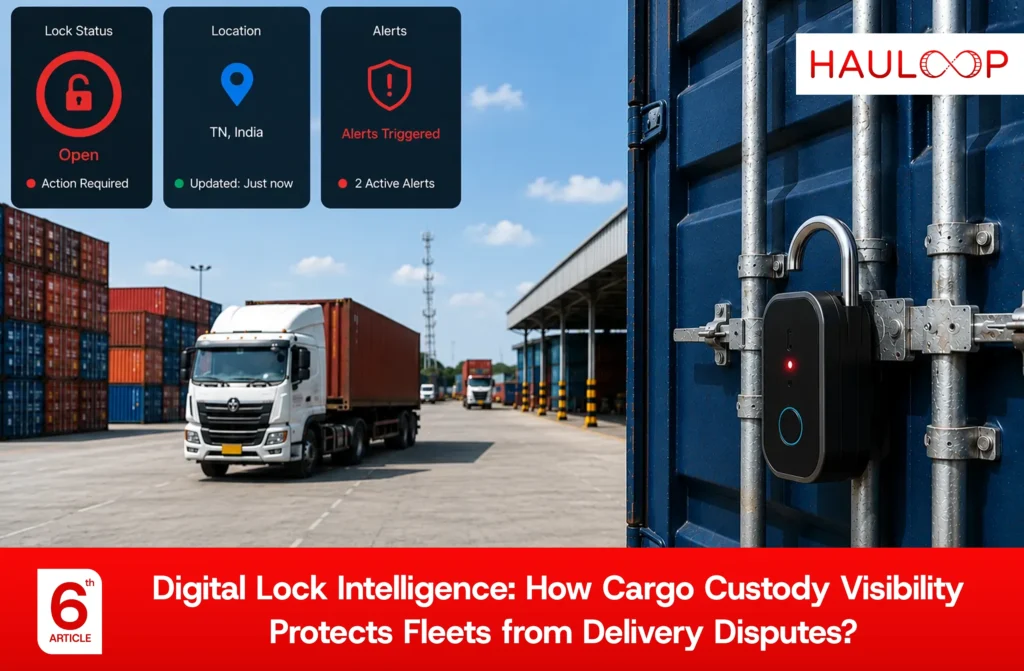
This is where digital lock intelligence becomes important. For fleet management, cargo custody is no longer just about locking the truck. It is about proving when the cargo door was opened, where it was opened, who authorised it, and whether the cargo stayed sealed throughout the journey.
What a Digi Lock Actually is?
A digi lock is an electronically controlled locking mechanism fitted to the cargo door of a truck.
It looks like a heavy-duty padlock.
The difference is everything inside it.
A conventional padlock can be opened by anyone with the key or a bolt cutter. It generates no record. It sends no alert. It cannot prove when it was locked, when it was unlocked, who authorised the unlock, or where the vehicle was when the door opened.
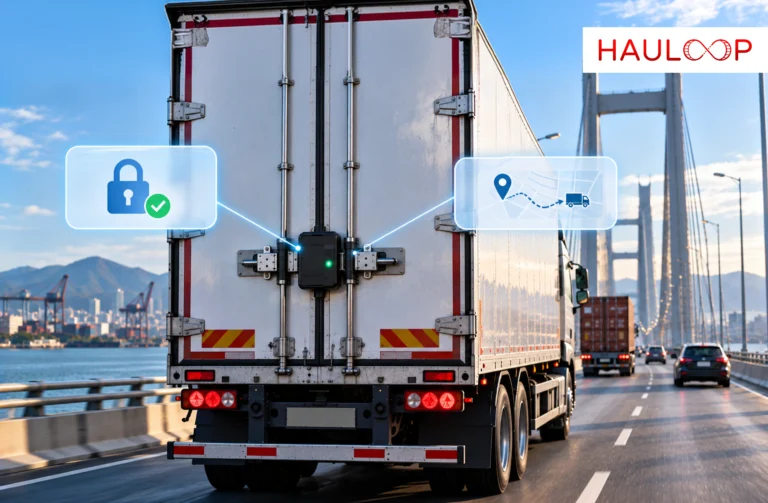
A digi lock generates a timestamped, GPS-intelligence record of every locking and unlocking event.
It communicates with the vehicle’s telematics system. Every event, lock, unlock, tamper attempt, forced entry, is logged with the time, the GPS coordinates, and the authorisation that triggered it.
The Fundamental Shift
| Conventional Padlock | Digi Lock |
| Tells you the door was closed when the truck left | Tells you every time the door opened |
| No timestamped record | Every lock and unlock event is timestamped |
| No GPS proof | Every event is GPS-correlated |
| No authorisation trail | Shows who authorised the unlock |
| No tamper alert | Sends alerts for tamper attempts and forced entry |
| No custody evidence | Creates a digital cargo custody record |
A padlock tells you the door was closed when the truck left.
A digi lock tells you every time the door opened, where the truck was when it opened, who authorised the opening, and how long it was open.
Why this Matters Now — The E-Way Bill Context?
India’s e-way bill system has undergone significant tightening since 2024.
Understanding the current rules explains why digital custody documentation is no longer optional for FMCG, pharma, and high-value logistics operators.
Current E-Way Bill Rules Every Transporter Needs to Know
| Rule | What It Means |
| ₹50,000 threshold | E-way bill is mandatory for any goods movement above ₹50,000 in value |
| 4-hour rule — 2025 | Vehicle numbers must be updated within 4 hours of dispatch |
| 200 km/day validity | Updated from 100 km/day in 2024, reducing validity extensions for long-distance shipments |
| Expiry penalty | Goods cannot move on an expired e-way bill |
| Penalty amount | ₹10,000 or applicable tax amount, whichever is higher |
| Enforcement risk | Goods can be detained and vehicles seized |
| GSTR-3B linkage — 2025 | E-way bill generation blocked for taxpayers who have not filed GSTR-3B for 2 consecutive months |
| Extension limit | Extensions capped at 360 days from original generation date |
The e-way bill confirms that goods were dispatched.
It does not confirm that the goods arrived, arrived intact, or arrived in the quantity stated.
That gap between dispatch confirmation and delivery confirmation is where disputes live.
A digi lock creates the delivery event record that the e-way bill system cannot.
Geofence arrival at the delivery location. Lock authorisation issued. Digi lock opened. Timestamp logged. Goods unloaded. Digi lock closed.
The entire custody event is recorded, GPS-correlated, and timestamped.
This is the digital POD, the Proof of Delivery that paper can never reliably produce.
The Three Buyers Who Need this Today
Buyer 1 — The FMCG Distributor Losing Money on Delivery Disputes
If you are running 20 to 60 trucks delivering to organised retail, hypermarkets, supermarket chains, quick commerce DCs, you are already paying money you should not be paying.
Large FMCG principals know that small distributors cannot fight a claim.
When a hypermarket DC raises a shortfall claim, eight cartons missing from a 240-carton delivery, ₹3,000–₹5,000 deducted, the distributor typically pays it.
Not because the claim is legitimate, but because contesting it requires evidence that does not exist.
Without a digi lock, you have no independent record of whether the cargo door was opened between the depot and the DC.
With a digi lock, you have the geofence timestamp showing when the truck arrived at the DC. You have the lock event showing that the door was not opened between the depot and the DC. You have the authorised unlock event at the DC gate.
This record does not prove your driver is honest.
It proves whether the cargo door was opened on route, which is the question the claim is actually asking.
Buyer 2 — The Pharma Logistics Operator Managing GDP Compliance
Good Distribution Practice, or GDP, for pharmaceuticals requires an unbroken documentation chain for every consignment, origin, transit conditions, custody chain, and delivery confirmation.
For Schedule H and H1 drugs, vaccines, and biologics, these are regulatory requirements.
A break in the documentation chain does not just create a dispute.
It creates a product liability event.
The pharma logistics audit is becoming more frequent and more rigorous in India as multinational pharma principals bring global GDP standards to their Indian distribution contracts.
An operator who shows up to a GDP audit with paper PODs, handwritten temperature logs, and no digital custody record is not going to win or retain that contract.
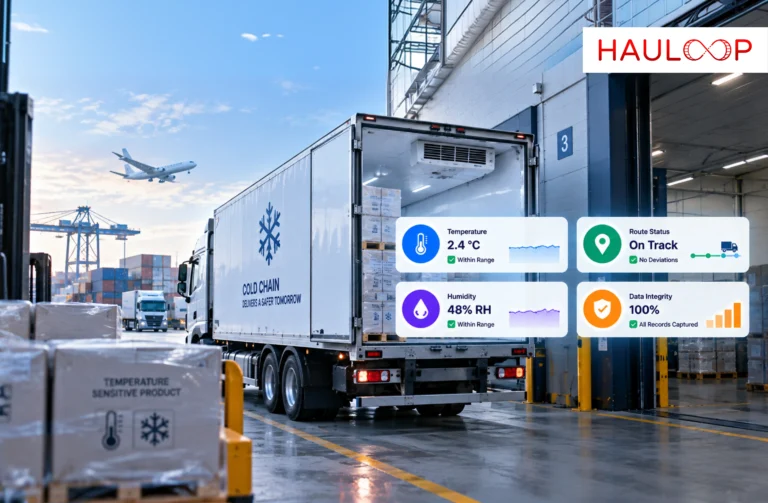
A digi lock integrated with GPS, reefer temperature monitoring, and geofence delivery confirmation creates a continuous digital audit trail that a GDP auditor can review for any consignment, any date, any route.
Buyer 3 — Any Fleet Operator Bidding for a Principal Contract with Documentation Requirements
A distributor running FMCG deliveries in Abu Dhabi lost a major contract tender at the documentation audit stage, not on price, not on fleet quality, but on their inability to produce three months of timestamped PODs with delivery confirmation.
The same distributor won the contract on resubmission using Hauloop’s digital POD export.
The audit passed in three working days.
In India, the same dynamic is developing in organised retail, e-commerce fulfilment, and pharma distribution.
The principals who can demand documentation standards are doing so. The distributors who can produce digital documentation are winning contracts.
The ones who cannot are losing them, often at the audit stage, before price is even discussed.
The Four Things a Digi Lock Knows That Paper Never Will
1. Whether the Cargo Door Was Opened in Transit
A padlock can be cut, replaced, and reattached without leaving a trace.
A digi lock tells you exactly this:
The door was locked from 6:45 am until 11:40 am, when it was unlocked at GPS coordinates matching the first DC’s geofence.
It was not opened at any intermediate stop.
If the door was opened at an intermediate stop, the digi lock record shows it.
The GPS coordinates show where.
The timestamp shows when.
2. Who Authorised the Unlock and When
A digi lock integrated with Hauloop requires authorisation before it unlocks.
That authorisation can be a manager-issued PIN, a platform-generated code, or an automatic geofence trigger at an approved delivery point.
Every authorisation is logged against the authorising account.
The operations manager knows, in real time, every time a cargo door is opened, and can see whether it was opened at an authorised location by an authorised person.
Unauthorised unlock attempts trigger an immediate WhatsApp alert.
3. Whether a Tamper Attempt Occurred
A bolt cutter on a conventional padlock leaves no electronic record.
A tamper attempt on a digi lock, forced entry, cutting of the shackle, device removal, triggers a tamper alert to the operations manager and logs the event with GPS coordinates and timestamp.
This creates an immediate alert and an irrefutable record.
The difference between a cargo theft discovered at delivery and one discovered in transit is the difference between a total loss and an interceptable one.
4. The Delivery Event Record that Creates a Digital POD
When the truck arrives at the DC, and the digi lock is authorised to open, the system records:
Geofence entry time.
Lock authorisation.
Unlock event.
Geofence exit time.
Combined with a GPS track, this produces a delivery record that contains more information than any paper POD and cannot be altered retrospectively.
This record answers the question every delivery dispute is really asking:
Did the cargo arrive at the right place, at the right time, with the door intact?
The Honest Scope of What a Digi Lock Protects Against
A digi lock is not a complete cargo security solution.
It is a specific tool for a specific problem.
| What It Protects Against | What It Does Not Protect Against |
| Opportunistic cargo access during transit stops | A consignment loaded short at the depot before the door closes |
| Driver or helper pilferage from the cargo hold | Theft during loading or unloading when the door is legitimately open |
| False delivery shortage claims when the door was not opened in transit | Collusion between driver and receiving warehouse where both events appear authorised |
| Documentation gaps in delivery confirmation for principal audit requirements | Incorrect counting at loading or receiving point |
The most credible use of a digi lock is as a documentation tool, not just a physical security tool.
The physical security is secondary.
The primary value is the irrefutable digital record of what happened to the cargo door between depot departure and delivery confirmation.
The Maharashtra Signal — and What it Means for the Rest of India
From July 1, 2025, Maharashtra mandated GPS-enabled electronic locks on all vehicles carrying alcohol.
The mandate requires tamper-proof digital locks connected to GPS and state IT systems.
This is the first state-level digi lock mandate in India.
For FMCG, pharma, and high-value logistics operators, the compliance window is open.
The pattern in India has been consistent, pilot mandates in specific sectors, then broader rollout.
AIS-140 followed exactly this trajectory from 2020 to 2023.
Operators who fit digi locks as a voluntary documentation upgrade today get the documentation benefits immediately and the compliance benefit when the mandate arrives.
Operators who wait for the mandate pay compliance costs under deadline pressure.
What to do this Week?
1. Identify Your High-Value and High-Dispute Routes First
Pull your last six months of delivery dispute data.
Which principal, which routes, which DCs generate the most shortfall claims?
Those routes are your first priority for digi lock deployment.
2. Audit Your Current POD Process for Your Top Three Principals
For each principal, ask one question:
Can you produce a timestamped delivery record with geofence confirmation for any delivery in the last 90 days?
If the answer is no, you have a documentation gap.
3. Ask Your Pharma or FMCG Principal What They Actually Want
Most large principals have specific documentation requirements buried in their distribution contracts, often not enforced until a dispute or renewal audit.
Understanding what they require, versus what they have been accepting, tells you how much of a gap you are operating with.
4. Consider the E-Way Bill Alignment
A digi lock that integrates with your e-way bill workflow creates a compliance record that matches your GST filing data.
If your e-way bill shows departure at 6:45am and arrival at 11:40 am, and your digi lock shows the door sealed throughout, your compliance chain is complete.
The Question Every Shortfall Claim Is Really Asking
When a principal raises a shortfall claim, they are asking one question:
Where did the missing units go?
There are four possible answers.
The goods were loaded short at the depot.
The goods were removed from the cargo hold in transit.
The goods were taken during unloading at the delivery point.
The goods are not actually missing, and the count is wrong.
A digi lock cannot answer the first, the third, or the fourth.
But it answers the second, definitively.
If the door was not opened between depot departure and delivery confirmation, the goods did not leave the cargo hold in transit.
For a distributor paying ₹3,000–₹6,000 per shortfall claim, and contesting ten to fifteen claims a month, the digi lock that eliminates even half of those claims pays for itself within the first quarter.
The rest is contractual protection, tender documentation, and a record that defends your driver when the shortage is not his fault.
Conclusion
Paper PODs tell you someone signed something.
They do not tell you what happened to the cargo door between depot departure and delivery.
That gap is where disputes, deductions, cargo loss, and audit failures happen.
Digital lock intelligence closes that gap.
It gives fleet operators timestamped, GPS-correlated, authorisation-linked evidence for every cargo door event. It shows when the door opened, where it opened, who authorised it, and whether tampering occurred.
For FMCG distributors, pharma logistics operators, high-value cargo fleets, and transporters bidding for principal contracts, this is no longer just a security upgrade.
It is a custody documentation system.
Hauloop’s digi lock integration connects cargo door custody events to your GPS track, geofence delivery confirmations, and e-way bill workflow, creating a digital POD chain that covers every consignment from depot departure to delivery sign-off.
Book a demo with Hauloop to see what your current delivery documentation looks like when cargo custody is tracked in real time.
This is the final blog in our Fleet Intelligence Series. Across this series, we explored Fuel Loss Intelligence, Tyre Performance Intelligence, GPS Intelligence, OBD Intelligence, Dashcam Intelligence, and Digital Lock Intelligence, six fleet intelligence layers that help operators move from delayed reporting to measurable operational control.
Frequently Asked Questions
What is a digi lock in fleet management?
A digi lock is an electronic cargo door lock that records lock, unlock, tamper, and forced entry events with timestamps, GPS location, and authorisation details.
How does a digital lock help reduce delivery disputes?
A digital lock creates a record of whether the cargo door was opened between depot departure and delivery. This helps prove whether goods could have been removed during transit.
What is digital cargo custody?
Digital cargo custody is the process of tracking and recording cargo access events during transit, including lock status, unlock authorisation, tamper attempts, GPS location, and delivery confirmation.
How is a digi lock different from a normal padlock?
A normal padlock only secures the door physically. A digi lock creates a digital record of every door event and sends alerts for unauthorised access or tampering.
Which fleets need digital locks most?
FMCG distributors, pharma logistics operators, high-value cargo fleets, alcohol transporters, e-commerce delivery fleets, and operators handling principal contracts benefit most from digital locks.
Can digi locks support e-way bill and POD documentation?
Yes. When integrated with GPS, geofencing, and delivery workflows, digi locks can support digital POD records and strengthen the custody chain between dispatch and delivery.